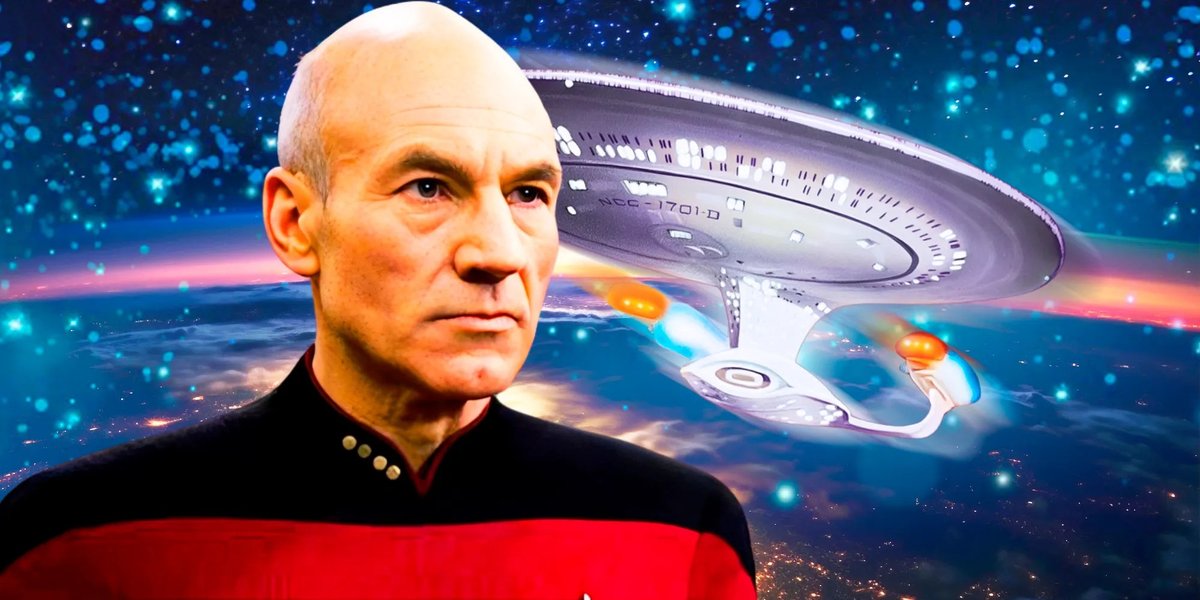
Ah, Star Trek: The Next Generation. Even decades after it first graced our screens, the mention of the NCC-1701-D evokes a flood of memories: Picard's gravitas, Data's quest for humanity, Worf's honor, Riker's swagger. With 178 episodes spanning seven seasons, TNG crafted a legacy of high drama, compelling characters, and incredibly smart storytelling. Iconic episodes like "Yesterday's Enterprise," "The Inner Light," and "Best of Both Worlds" rightly earn their frequent accolades, but what about the unsung heroes? The episodes that, for one reason or another, fly under the radar, yet offer profound insights, thrilling plots, or just plain good fun?
It's time to shine a spotlight on these Underrated & Hidden Gem Star Trek: TNG Episodes—the ones you might have forgotten, dismissed, or simply never fully appreciated. These aren't just filler; they're essential pieces of the TNG tapestry, enriching the universe and deepening our connection to its crew.
At a Glance: Why These TNG Gems Shine Brightest
- Deeper Character Portrayals: Many "underrated" episodes push secondary characters or reveal new facets of the main cast.
- Genre-Bending Storytelling: Expect sci-fi mysteries, psychological thrillers, political allegories, and even pure action flicks.
- Challenging Starfleet Ideals: Some tackle the Prime Directive, the nature of sentience, or the Federation's morality in nuanced ways.
- Early Season Surprises: Even the "uneven" first two seasons contain experimental episodes that break new ground.
- Pure Entertainment Value: Sometimes, an episode is just good, goofy fun that deserves a rewatch.
Beyond the Holodeck & Borg: Unearthing TNG's Overlooked Stories
Star Trek: The Next Generation set a high bar for science fiction television, but its sheer volume meant that not every episode could become a fan favorite or critical darling. Some were deemed too "silly," too "slow," or perhaps simply overshadowed by the blockbuster narratives of the Borg or Q. Yet, within this vast library are stories that deserve a second look, narratives that quietly contribute to the show's enduring brilliance. They often take risks, explore unusual concepts, or give unexpected depth to the crew we thought we knew so well.
If you're looking to dive deeper into the Enterprise's adventures beyond the well-trodden paths, or want to expand your appreciation for what makes TNG one of the best Next Gen episodes, these hidden gems offer a fresh perspective.
Character Deep Dives & Unexpected Twists: Episodes That Redefine Our Heroes
While Picard, Data, and Worf often commanded the spotlight, some of TNG's most poignant and revealing episodes were those that forced other characters into unexpected situations, peeling back layers you might not have known were there. These episodes remind us that Starfleet officers are, despite their uniforms and advanced technology, still deeply human (or striving to be).
"Rascals" (Season 6, Episode 7): Goofy Fun with a Heart
Often criticized as preposterous or overtly silly, "Rascals" embraces its comedic premise: Picard, Ensign Ro, Guinan, and Keiko O'Brien are reverted to children after a transporter malfunction. What ensues is a surprisingly fun romp as teenage Picard, leading the other children, must fight off Ferengi pirates who have taken over the ship.
Yes, it's a bit ridiculous, but the episode offers delightful insights into the characters' inner selves. Young Picard’s stubbornness and natural leadership are hilariously apparent, while the dynamic between the child versions of the adults provides a unique perspective on their relationships. It’s a lighthearted break from typical TNG drama, showcasing the cast's comedic chops and reminding us that sometimes, even in the 24th century, a little bit of goofy fun is exactly what's needed.
"Disaster" (Season 5, Episode 5): When Everything Goes Wrong
Imagine the Enterprise, struck by an unknown phenomenon, systems failing, and the crew separated and trapped. That's "Disaster" in a nutshell, and it’s a masterclass in character-driven storytelling. Picard finds himself trapped in a turbolift with three children, forced to be their protector and teacher. Troi, despite her lack of command experience, must take the helm on the bridge. Riker and Data navigate dangerous, collapsing decks. Geordi and Dr. Crusher face a radiation leak, and Worf assists Keiko O'Brien as she goes into labor.
This episode showcases the ingenuity and resilience of the crew when stripped of their usual roles and resources. It highlights individual strengths and vulnerabilities, proving that TNG's ensemble cast was capable of carrying disparate storylines that converged into a thrilling whole. You'll see new facets of beloved characters under immense pressure, making it a standout for its clever problem-solving and character development.
"Remember Me" (Season 4, Episode 5): A Terrifying, Personal Mystery
Dr. Beverly Crusher is at the heart of this criminally overlooked gem. Her former mentor, and then other crew members, begin to disappear, not just from the ship, but from everyone's memories—except hers. Believed to be losing her mind, Crusher races against time to solve the mystery before she, too, is forgotten.
"Remember Me" is a genuinely terrifying suspense episode wrapped in engaging character work. It delves into Crusher's deepest fears of loss and isolation, leveraging her empathy to drive the narrative. The concept of a "bubble universe" where causality breaks down is explored with chilling effectiveness, making this a powerful and unique entry that showcases Gates McFadden's exceptional acting.
"Sarek" (Season 3, Episode 23): A Legacy's Lingering Shadow
Spock's iconic father, Ambassador Sarek (played by the legendary Mark Lenard), visits the Enterprise for his final treaty negotiation. However, his presence brings a disturbing side effect: the crew experiences violent, uncontrolled emotional outbursts. The cause is traced to Sarek himself, who is suffering from a degenerative neurological disorder that amplifies his emotions, yet he denies his condition.
This powerful episode serves as a moving allegory for aging and the social stigma of disease. It provides strong material for both Lenard and Patrick Stewart, whose Picard must connect with Sarek on a deeply emotional level to help him accept his vulnerability. The scene where Sarek allows Picard to feel his lifetime of suppressed emotions is one of the most impactful in the entire series, solidifying this episode's place as a quiet masterpiece.
"The Nth Degree" (Season 4, Episode 19): Barclay's Moment to Shine
Lt. Reginald Barclay, known for his social anxieties and holodeck addictions, is a character often played for comedic relief. But in "The Nth Degree," he is struck by an alien artifact, transforming him into a genius with vastly enhanced intelligence and confidence. He saves the ship during a crisis, but his connection to the computer grows, eventually compelling him to send the Enterprise on an inexplicable journey to the galaxy's center.
This "Star Trek" take on "Flowers for Algernon" explores Barclay's journey of self-acceptance and the challenges of sudden, overwhelming intellect. Dwight Schultz delivers a nuanced performance, showcasing Barclay's growth and the crew's struggle to understand his transformation. It's a testament to TNG's ability to take a recurring character and give him a truly transformative, thought-provoking arc.
"Skin of Evil" (Season 1): A Jarring Introduction to Unreasoning Malice
In an early Season 1 episode, "Skin of Evil" marked a radical departure from TNG's initially "safe" approach. The crew encounters Armus, a malevolent, unreasoning oil slick that, for no significant plot reason beyond pure malice, kills Security Chief Tasha Yar.
This episode is shocking, not just for its major character death, but for its portrayal of an implacable foe that forces the crew, particularly Data, to reconsider Starfleet's core ideals about the right of all creatures to exist when faced with pure, inexplicable evil. It's refreshingly free of techno-babble, presents a genuinely terrifying, non-humanoid alien, and is a stark reminder that the universe isn't always fair, and sometimes, bad things just happen. It's an uncomfortable watch, but a powerful one, showing early signs of TNG's willingness to go to dark places.
Philosophy, Morality & The Prime Directive: TNG's Thought-Provoking Underdogs
TNG was at its best when it challenged viewers with complex ethical dilemmas and expanded our understanding of the universe. Many underrated episodes don't just tell a story; they ask profound questions about life, society, and what it means to be Starfleet.
"Time Squared" (Season 2, Episode 13): A Picardian Mystery
From TNG's second season, "Time Squared" presents an intriguing mystery: The Enterprise encounters a shuttle containing Captain Picard from six hours in the future. This future Picard is mute, catatonic, and the sole survivor of the Enterprise's destruction by an inexplicable space vortex. The "present" Picard must prevent the catastrophe and reconcile with his vulnerable, future self.
This early episode dares to question typical Star Trek philosophy by providing no clear answers to cosmic phenomena. It's a tense, character-driven mystery that explores themes of fate, free will, and the burden of command. The ambiguity of the resolution leaves a lingering unease, making it a compelling, understated thriller that many forget came from the show's formative years.
"The Hunted" (Season 3, Episode 11): The Cost of War
While visiting Angosia, Picard learns a shocking truth: a supposed "criminal" is actually Roga Danar, a genetically augmented war hero. The Angosians created these "killing machines" during a past conflict but, unable to reverse the augmentations post-war, chose to imprison their veterans.
"The Hunted" uses science fiction to confront the deeply political and human issue of how society treats its struggling military veterans. It's a powerful and poignant commentary on the consequences of war and a society's responsibility to those it creates for combat. This episode is a prime example of TNG at its best—using a sci-fi premise to tackle real-world ethical dilemmas.
"The Wounded" (Season 4, Episode 12): The Scars of Conflict
One year after the Federation-Cardassian war, this episode marks the official debut of the Cardassians and explores the lingering horrors and toll of conflict. Captain Benjamin Maxwell, a decorated war veteran, goes rogue, hunting Cardassian ships, believing them to be re-arming. Picard is tasked with escorting Cardassian observers to find Maxwell, who makes stunning accusations that force the Federation to question its uneasy peace.
"The Wounded" introduces the complexities of the Federation-Cardassian relationship, a dynamic that would profoundly impact Deep Space Nine. It also reveals Chief Miles O'Brien's veteran status and his lingering prejudice, adding significant depth to his character. The episode is a nuanced exploration of paranoia, justice, and the difficulty of moving past wartime trauma, making it crucial for understanding the wider Star Trek universe.
"First Contact" (Season 4, Episode 15): A Prime Directive Dilemma from a New Angle
On Malcor III, a pre-warp civilization, Riker's undercover mission for first contact is compromised, inadvertently revealing the existence of aliens to the locals and causing panic. The Malcorian government becomes split between progressive and conservative factions. Picard must rescue Riker and convince the Malcorians of their non-hostile intentions, all while upholding the Prime Directive.
This overtly political episode, featuring a fantastic performance by Bebe Neuwirth, is told largely from the alien perspective, offering a fresh take on the classic Prime Directive dilemma. It explores the cultural shock and fear that would inevitably accompany such a revelation, forcing both the Enterprise crew and the Malcorians to confront their preconceived notions. It's a complex, character-driven story that reminds us of the profound responsibility Starfleet carries.
"The Royale" (Season 2): A Daring Look at the Truly Alien
This Season 2 episode often receives critical derision, but it's a daring exploration of the truly alien and inexplicable. The Enterprise discovers a perfectly preserved 20th-century casino/hotel on an inhospitable alien planet. An Away Team is trapped in this bizarre setting, which they discover was created by aliens as a shrine for a human astronaut, mistakenly basing it on a dime-store novel.
"The Royale" critiques the human arrogance of assuming advanced understanding and literal interpretations of cultural texts. It’s an unsettling, almost surreal episode that plays with expectations and pushes the boundaries of what Star Trek could be. It might not be everyone's cup of Earl Grey, but it's memorable precisely because it's so strange and committed to its unusual premise, making it a true hidden gem for those who appreciate experimental storytelling.
"11001001" (Season 1): Love Across the Digital Divide
In this early Season 1 episode, Commander Riker develops an unexpected, profound romance with Minuet, an enhanced hologram designed to distract him while the ship undergoes extensive upgrades by the mysterious Bynars (aliens connected by computer interface). Minuet achieves a deep "human" connection with Riker, blurring the lines between artificial intelligence and genuine emotion.
"11001001" foreshadows later themes of hologram sentience and rights within the Star Trek franchise. It's a poignant exploration of how life invariably connects and how love can transcend conventional forms, even between a human and a simulated being. This episode stands out as a thoughtful, emotional piece from an era when TNG was still finding its footing, demonstrating its early potential for philosophical depth.
Thrills, Espionage & Action: TNG Episodes That Keep You On The Edge
While TNG is renowned for its intellectual prowess, it also delivered some truly exciting and suspenseful narratives. These underrated episodes lean into the action-thriller genre, showcasing the crew's ingenuity and courage in high-stakes situations.
"Starship Mine" (Season 6, Episode 18): Picard as John McClane
During routine Enterprise maintenance, the ship requires a deadly thallium-based radiation sweep, forcing all crew off-board. Picard, the last to leave, discovers a sinister group of thieves taking over the seemingly abandoned vessel to steal a dangerous chemical weapon from a hidden vault. Alone and trapped, Picard must become a cold-blooded killer, relying on wits, stealth, and his Starfleet training to stop them and escape the encroaching radiation.
This episode offers a fantastic, action-oriented side of Picard, akin to "Die Hard" in space. Stripped of his command and his crew, he's a resourceful lone wolf, proving his capabilities extend far beyond the captain's chair. It's a taut, suspenseful thriller that's a refreshing change of pace for the series and a showcase for Patrick Stewart's versatility.
"Power Play" (Season 5, Episode 15): A Hostage Crisis with a Sci-Fi Twist
After answering a distress call from the USS Essex, Data, Troi, and Chief O'Brien are possessed by the ethereal spirits of the Essex's deceased crew. These entities demand their physical remains be returned to Earth, threatening hostages and taking control of the Enterprise. Picard and the rest of the crew must navigate a unique hostage crisis, unravel a Starfleet mystery, and deal with sci-fi body swaps.
This episode is a unique blend of genres, combining a tense standoff with a ghostly mystery. It forces the crew to contend with an antagonist that isn't physical, relying on negotiation, empathy, and scientific ingenuity. The performances by Brent Spiner, Marina Sirtis, and Colm Meaney as they portray possessed versions of their characters are particularly memorable, adding a chilling layer to the narrative.
"The Game" (Season 5, Episode 6): Addiction and Alien Infiltration
Commander Riker brings back an addictive, mind-altering game from Risa that subtly takes control of the crew, slowly turning them into pawns for an alien enemy. It falls to Wesley Crusher, along with Ensign Robin Lefler (a wonderfully intelligent and independent Ashley Judd), to avoid addiction and save the ship from the alien takeover and the mind-controlled crew.
"The Game" functions as an effective action thriller, reminiscent of "Invasion of the the Body Snatchers." It expertly explores themes of addiction, conformity, and the dangers of seemingly harmless pleasures. The escalating tension and the feeling of isolation as Wesley realizes the extent of the infiltration make this a genuinely exciting and thought-provoking episode that showcases the younger cast members.
"The Mind's Eye" (Season 4, Episode 25): A Taut Brainwashing Thriller
Geordi La Forge is kidnapped by Romulans and brainwashed using insidious psychological techniques. A Klingon conspirator then uses a subtle device to subliminally instruct Geordi to assassinate a Klingon colony's Governor, escalating tensions between the Federation and the Klingon Empire.
This Star Trek remake of "The Manchurian Candidate" is a taut, psychological thriller. It explores the dark side of mind control and espionage, with Geordi becoming an unwitting weapon. The episode skillfully continues the long-running Klingon/Romulan plot to destabilize the Federation, providing high stakes and a compelling mystery as the crew races to uncover the truth behind Geordi's increasingly erratic behavior.
Beyond the A-Listers: Why These Episodes Endure
These underrated TNG episodes don't just fill out the season count; they're vital threads in the rich tapestry of the series. They often:
- Expand the Character Canvas: By focusing on supporting characters or pushing main characters into unfamiliar territory, these episodes provide crucial depth. We see Picard's vulnerability, Crusher's terror, Barclay's triumph, and O'Brien's wartime scars.
- Showcase TNG's Thematic Range: From lighthearted comedy to intense psychological thrillers, from profound philosophical debates to action-packed survival stories, these episodes demonstrate the sheer breadth of TNG's storytelling capabilities beyond its most famous arcs.
- Reinforce Starfleet's Ideals: Even in the face of the inexplicable ("Time Squared") or pure malice ("Skin of Evil"), the crew's commitment to exploration, diplomacy, and justice is tested and, ultimately, affirmed.
- Offer Fresh Perspectives: Whether it's seeing a first contact scenario from the alien's point of view ("First Contact") or critiquing human understanding through alien eyes ("The Royale"), these episodes challenge our assumptions.
Ignoring these gems means missing out on some of the most creative, daring, and deeply human stories Star Trek: The Next Generation ever told.
Your Next Mission: Re-Discovering the Enterprise's Hidden Depths
If you're a long-time fan looking to rekindle your love for Star Trek: The Next Generation, or a new viewer eager to explore beyond the essential viewing lists, consider adding these underrated and hidden gem episodes to your watchlist. They are a testament to the show's consistent quality and its willingness to take risks, even in its less celebrated moments.
So, queue up your streaming service, settle into your captain's chair, and prepare to discover (or rediscover) some of the Enterprise-D's most compelling, unexpected, and truly memorable voyages. You might just find a new favorite among these overlooked masterpieces.