For a show that began with a bald captain, a robotic operations officer, and a counseling empath, Star Trek: The Next Generation not only filled the monumental shoes of its predecessor but arguably surpassed it in storytelling depth and sheer ambition. More than thirty years after its debut, TNG remains a cultural touchstone, a beacon of intelligent science fiction, and a masterclass in ensemble drama. So, how do you even begin to parse through 178 episodes to find The Absolute Best Star Trek: TNG Episodes of All Time? It’s a mission worthy of Starfleet itself, demanding a deep dive into stories that challenged, thrilled, and made us ponder the very essence of humanity.
This isn't just a list; it's a celebration of television at its finest, a guided tour through the narratives that cemented TNG’s legacy. We’re talking about episodes that transcended typical sci-fi, offering intense dramas, gripping thrillers, and action-packed battles, all while maintaining a rich philosophical core.
At a Glance: Why TNG Still Reigns Supreme
- Pillar of Sci-Fi: TNG defined an era of speculative fiction, balancing high-minded ideals with compelling personal stories.
- Diverse Storytelling: From psychological thrillers and horror to deep philosophical debates and action epics, TNG mastered multiple genres.
- Character-Driven Drama: The crew of the Enterprise-D are not just archetypes; their growth and struggles form the heart of the series.
- Enduring Relevance: Many of TNG’s themes — prejudice, morality, technology's impact — are as pertinent today as they were decades ago.
- Unmatched Re-watchability: These episodes offer new insights with every viewing, making them timeless classics.
Beyond the Bridge: TNG's Enduring Legacy
Before we jump into the individual triumphs, it’s worth a moment to appreciate the canvas TNG painted. Star Trek: The Next Generation wasn't content to simply revisit familiar territory; it pushed the boundaries of what serialized television could achieve. It tackled complex social issues, explored the ethical dilemmas of advanced technology, and consistently presented a hopeful, yet challenging, vision of the future. The writers, producers, and cast worked in concert to create a universe that felt both aspirational and deeply human, even when dealing with alien species and intergalactic threats.
The show dared to ask profound questions, often with no easy answers. It built a foundation for subsequent Star Trek series, demonstrating that the franchise could evolve while staying true to its core principles. When people talk about the best TNG episodes, they're often referring to these landmark achievements in thoughtful entertainment.
Stories That Defined a Generation: Our Picks for the Pinnacle Episodes
Let's explore the episodes that stand out, not just for their plots, but for their enduring impact on viewers and the Star Trek canon.
Exploring the Human Condition (and Beyond)
These episodes delve deep into what it means to be alive, to have consciousness, and to confront our own biases and beliefs.
I, Borg (Season 5)
This episode is a masterclass in challenging preconceived notions. The Enterprise rescues a lone, damaged Borg drone, and rather than simply destroying it or exploiting it, Dr. Crusher insists on treating its injuries. Renamed Hugh, this drone slowly begins to develop individuality under the crew's care, particularly Geordi's. Picard, still haunted by his assimilation as Locutus, initially plans to use Hugh as a weapon, infecting the Borg Collective with a virus. However, witnessing Hugh's transformation from a mindless drone to an individual forces Picard to confront his deep-seated hatred and prejudices.
"I, Borg" explores the ethical implications of weaponizing a sentient being, even if that being belongs to an enemy race. It's a poignant exploration of empathy, identity, and the potential for even the most formidable adversaries to evolve. Hugh's story continued to resonate, carrying weight all the way into Star Trek: Picard, proving the lasting impact of this single episode. It’s a testament to TNG's ability to take a monstrous villain and infuse it with profound emotional depth.
Sins Of The Father (Season 3)
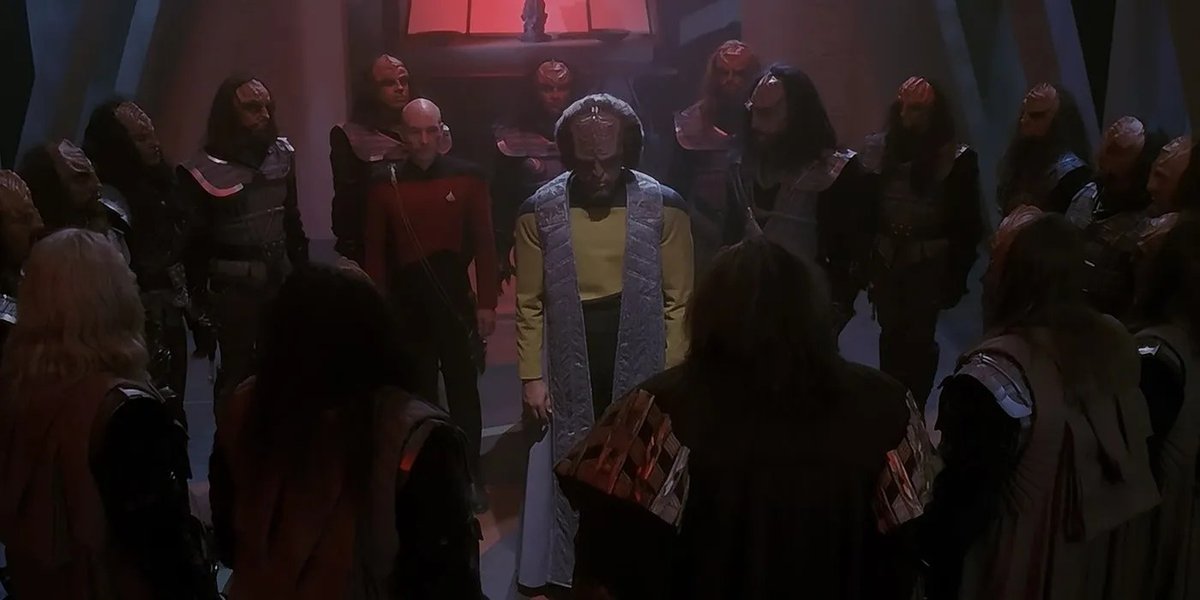
No character on TNG wrestled with his identity and cultural heritage quite like Worf. In "Sins of the Father," Worf returns to his Klingon homeworld to answer a devastating accusation: his deceased father, Mogh, stands accused of betraying the Klingon Empire during the Khitomer Massacre. Accompanied by Picard, Worf uncovers a vast political conspiracy orchestrated by the Duras family, who seek to maintain power at any cost.
This episode is a fantastic dive into Klingon warrior culture, showcasing its intricate honor codes, rigid social structures, and brutal politics. Worf is forced to make an agonizing choice: either reveal the truth and risk a devastating Klingon civil war, or accept dishonor for his family to preserve the fragile peace of the Empire. His decision to accept discommendation, sacrificing his personal honor for the greater good, is one of Worf's most defining moments and a powerful portrayal of duty and sacrifice. It’s a pivotal moment in understanding the warrior-turned-Starfleet-officer.
Lower Decks (Season 7)
While many TNG episodes focus on the senior staff, "Lower Decks" offers a refreshingly grounded perspective, viewed through the eyes of junior officers. This episode follows a group of young ensigns and lieutenants — Sito Jaxa, Sam Lavelle, Taurik, and Ogawa — as they navigate their daily lives and career aspirations aboard the Enterprise. We see their anxieties, rivalries, friendships, and their struggle for recognition, contrasting sharply with the seemingly effortless competence of the main bridge crew.
The episode beautifully highlights the day-to-day operations and immense pressure faced by those lower in the chain of command. It takes a tragic turn when one of these promising young officers dies on a secret mission, underscoring the constant dangers of Starfleet duty and the profound importance of valor and sacrifice at every rank. "Lower Decks" humanizes the vast machinery of Starfleet, reminding us that every crew member, regardless of rank, contributes to the mission and faces the same risks. It inspired an entire animated series and stands as a unique, poignant entry in the series.
Mind-Bending Morality and Tough Choices
These episodes challenge the crew's, and the audience's, understanding of right and wrong, often presenting dilemmas with no easy answers.
Conundrum (Season 5)
Imagine waking up with no memory of who you are, what your purpose is, or even who the people around you are. That’s the terrifying premise of "Conundrum." The senior officers of the Enterprise, including Picard, Riker, Data, and Troi, suffer from amnesia after an unknown energy pulse. An alien impersonating a Starfleet officer exploits their vulnerability, convincing them that they are at war with a rival race and must annihilate them.
Without their established ranks, orders, or even personal histories, the crew is forced to rely on their individual morality and innate sense of justice rather than blind obedience. This episode brilliantly explores themes of identity, leadership, and the fundamental question of how we define ourselves and our ethical boundaries when all external markers are stripped away. It’s a thrilling psychological puzzle that culminates in a powerful statement about inherent human decency and the dangers of manipulation.
First Contact (Season 4)
No, not the movie with the Borg, but the Season 4 episode that explores the very premise of Star Trek: making first contact with new civilizations. Here, Riker is disguised as a Malcorian on a pre-warp planet, observing their society. When he's injured, he's discovered by a Malcorian scientist, forcing Picard to break the Prime Directive and introduce himself to the Malcorian Science Minister.
"First Contact" brilliantly portrays the immense societal breakdown and cultural shock that can occur when a pre-warp civilization suddenly discovers they are not alone, and certainly not the center of the universe. The episode explores the ethical tightrope Starfleet walks, balancing the desire to help with the need to avoid contamination. It highlights the profound responsibility of making such a revelation and the potential for fear, religious upheaval, and societal collapse. It’s a powerful reminder of the weight of Starfleet's most sacred directive.
The Ensigns Of Command (Season 3)
Data is often at his best when placed in situations that test his understanding of humanity and require him to use his unique abilities. In "The Ensigns of Command," Data beams down to an alien planet where a human colony has thrived, despite adapting to lethal radiation levels over generations. An alien race, the Sheliak, demands the humans be removed by a hard deadline, threatening to wipe them out if they refuse.
This episode showcases Data's incredible intellect, problem-solving skills, and his evolving understanding of human stubbornness and will. He must use all his wits, diplomacy, and a touch of calculated manipulation to convince the fiercely independent colony leader to evacuate, while simultaneously finding a loophole in the Sheliak's complex legalistic demands. It's a tense negotiation, a race against time, and a fascinating character study of Data's growth, proving that sometimes, the best weapon is a brilliant mind.
Thrillers, Horrors, and High Stakes Adventures
Sometimes, TNG ventured into darker, more intense territory, delivering pulse-pounding action and genuine scares. These are the episodes that keep you on the edge of your seat.
Chain Of Command (Season 6)
This two-part epic is a dark, gripping narrative that pushes Captain Picard to his absolute limits. Picard is sent on a black ops mission to destroy a Cardassian bioweapon facility, but it turns out to be a trap. He is captured and brutally tortured by the Cardassian Gul Madred, in an attempt to break his will and extract false confessions. The most famous scene involves Madred trying to force Picard to see four lights when there are only three, a chilling exploration of psychological manipulation and resistance.
Meanwhile, back on the Enterprise, a new, gruff captain (Edward Jellico, played by Ronny Cox) takes command, clashing immediately with Riker and the rest of the crew over his rigid command style and disregard for their established protocols. "Chain of Command" delves into themes of military torture, resilience, leadership under duress, and the psychological scars of war. It’s a harrowing, unforgettable story that cements Picard's status as one of fiction's most enduring heroes and is often cited among the best TNG episodes for its dramatic intensity.
Conspiracy (Season 1)
In its debut season, TNG dared to go surprisingly dark with "Conspiracy." This horror-themed episode sees Picard uncover a sinister plot: Starfleet Command itself is being infiltrated and taken over by parasitic alien creatures. These creatures implant themselves in Starfleet officers, controlling their minds and bodies. The atmosphere is tense and paranoia runs high as Picard and Riker try to identify the invaders.
The episode culminates in a truly graphic and unsettling confrontation, where Picard and Riker destroy a "Mother" alien, revealing a grotesquely exploding creature. This scene was notoriously violent for Star Trek, pushing the boundaries of what was acceptable on primetime television. "Conspiracy" is a chilling body-horror tale that proves TNG wasn't afraid to explore darker themes right from the beginning, leaving a lasting impression on viewers.
Genesis (Season 7)
Directed by Gates McFadden (Dr. Beverly Crusher herself!), "Genesis" is a truly bizarre and unsettling episode that ventures into biological horror. A malfunction in the Enterprise's "cellular regeneration" system causes the entire crew to de-evolve into primordial species. Riker becomes an Australopithecine, Worf transforms into an ancient Klingon ancestor, and Troi becomes an amphibian.
The episode's most memorable, and genuinely creepy, scene involves a de-evolving Barclay, already struggling with his phobias, turning into a terrifying half-arachnid creature that attacks Picard. Data and Beverly Crusher race against time to find a cure before the entire crew regresses beyond the point of no return. "Genesis" is a unique blend of body horror and thrilling sci-fi, demonstrating TNG's willingness to experiment with genre and deliver genuine scares.
The Grand Saga: Episodes That Shaped the Universe
These are the episodes that tie the grand narrative together, offering epic conclusions or pivotal moments that reverberate through the Star Trek universe.
All Good Things (Season 7)
The two-part series finale of Star Trek: The Next Generation is often hailed as one of the most perfect finales in television history, and for good reason. "All Good Things" brings back the omnipotent Q, who puts humanity (and specifically Picard) on trial one last time. Picard finds himself jumping through his own timeline — present, past, and future — to prevent an "unfathomable catastrophe" that threatens to erase all existence.
The episode masterfully weaves together nostalgia with a profound sense of closure and optimism. It reunites the Enterprise crew across different time periods, forcing them to work together in an unprecedented way to save the universe. It serves as a beautiful tribute to the characters and their journey, reinforcing the themes of exploration, cooperation, and the enduring spirit of humanity that defined the show. It’s an emotional and intellectual triumph, providing a satisfying, poignant send-off to one of sci-fi's greatest crews and truly stands as one of the best TNG episodes.
What Makes a TNG Episode Truly "Best"?
Beyond individual plot points, what elevates these particular episodes to iconic status? It's a combination of factors that, when blended perfectly, create enduring television.
Depth of Character Exploration
The best TNG episodes don't just tell a story; they reveal new facets of beloved characters. We see Picard's philosophical resilience tested under torture ("Chain of Command"), Data's quest for humanity refined through diplomacy ("The Ensigns of Command"), and Worf's internal conflict over honor and duty laid bare ("Sins of the Father"). These moments aren't just character beats; they are character defining.
Societal Commentary
Star Trek's enduring power lies in its ability to hold a mirror to our own society. "First Contact" makes us consider the impact of cultural shock, while "I, Borg" directly challenges our prejudices against perceived enemies. These episodes are timeless because the questions they pose about ethics, prejudice, and power are constantly relevant. They use the backdrop of space exploration to explore the human condition in profound ways.
Bold Storytelling
From the unsettling body horror of "Conspiracy" and "Genesis" to the intricate psychological drama of "Chain of Command" and "Conundrum," TNG wasn't afraid to push boundaries. The series consistently experimented with genre and narrative structure, demonstrating a willingness to take risks that often paid off in spectacular fashion. This bold approach allowed for a rich diversity of stories, keeping audiences engaged and surprised.
Re-watchability Factor
A true "best" episode isn't just impactful on a first watch; it gains depth with every subsequent viewing. You notice subtle performances, intricate plot details, and the layered philosophical undercurrents. Episodes like "All Good Things" and "I, Borg" stand up to repeated scrutiny, offering new insights and emotional resonance each time you experience them. They are more than just stories; they are experiences that invite repeated engagement. These qualities are what allow them to be repeatedly considered among the best TNG episodes by fans and critics alike.
Your Mission, Should You Choose To Accept It
Whether you're a seasoned Trekkie or a curious newcomer, diving into these episodes is more than just watching television; it's engaging with thoughtful, challenging, and profoundly human storytelling. These aren't just great Star Trek episodes; they're great television, period.
So, fire up your streaming service, settle in, and prepare to be transported to a future where intellect, empathy, and courage consistently prevail. You might just find your own personal "absolute best" among these stellar examples. Engage!