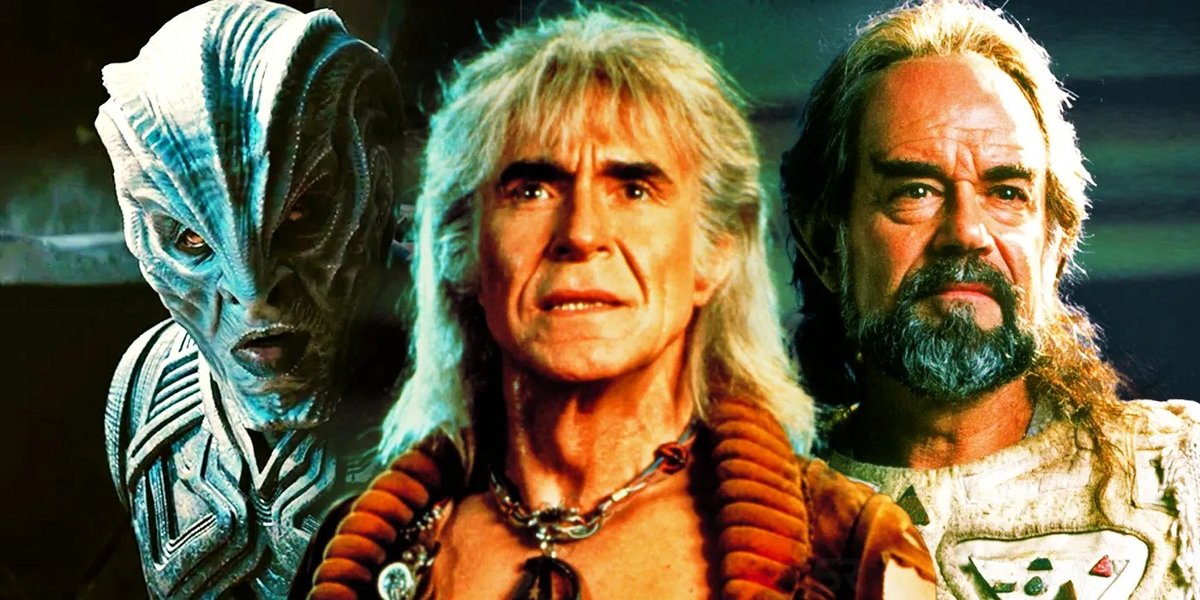
Engage! When Star Trek: The Next Generation first warped onto screens in the late 1980s, it promised a bold new era of exploration. Yet, for all its idealism, the USS Enterprise-D and her crew faced a universe teeming with threats, from omnipotent beings testing humanity to malevolent artificial intelligences and even the very darkness within themselves. These aren't just one-off adversaries; they are the Most Iconic Star Trek: TNG Villain & Antagonist Episodes, etchings in the show's legacy that challenged Captain Picard and his crew, pushing the boundaries of what it meant to be Starfleet.
This isn't just a list; it's a deep dive into the compelling characters and forces that defined TNG's conflicts, ranked by their impact, memorability, and the enduring questions they posed. So, set phasers to read, and prepare to revisit the Enterprise-D’s most formidable foes.
At a Glance: Key Takeaways from TNG's Toughest Adversaries
- The Best Are Complex: TNG rarely featured purely evil villains. Most iconic antagonists offered nuanced challenges, testing Starfleet's ideals, intelligence, or morality.
- Beyond the Phasers: The most memorable confrontations often relied on diplomacy, philosophy, psychological warfare, or clever tactics, rather than brute force.
- Personal Stakes Matter: The best villains weren't just threats to the Federation; they often posed personal dilemmas for Picard, Data, or the wider crew.
- Legacy Builders: Several TNG antagonists, especially The Borg and Q, reshaped the entire Star Trek universe, influencing subsequent series and films.
- Innovation in Antagonism: TNG introduced unique antagonist types, from sentient Holodeck programs to grief-stricken demigods and autonomous weapons systems.
The Enterprise's Toughest Trials: Understanding TNG's Antagonists
Star Trek: The Next Generation often preached a message of hope and advanced humanism, yet it understood that true drama requires conflict. For every scientific anomaly and diplomatic crisis, there was often a formidable villain or antagonist driving the narrative, pushing our heroes to their limits. These weren't always black-and-white 'evil' characters; sometimes they were forces of nature, misguided entities, or even reflections of humanity’s own potential for darkness.
What makes an iconic TNG antagonist? It’s a blend of factors: the sheer scale of the threat, the psychological depth, the moral quandaries they presented, and how profoundly they impacted the crew and the broader Federation. They forced Picard to question his principles, Data to explore his humanity, and the Enterprise to evolve its tactics. They weren't just obstacles; they were catalysts for growth.
Ranking the Most Iconic Star Trek: TNG Villain & Antagonist Episodes
Now, let’s navigate the cosmic rogues' gallery, assessing their impact, episode quality, and lasting legacy.
1. The Borg: The Apex Predator of the Galaxy
There is no doubt. The Borg stand as the undisputed champions of TNG antagonism, a hive mind of cybernetic organisms driven by a singular, chilling directive: "Resistance is futile." They seek to "enhance galactic quality of life" not through negotiation or trade, but through forced assimilation, adding the distinctiveness of countless species to their collective.
Why They're Iconic: The Borg represent the ultimate antithesis to Federation ideals. They erase individuality, freedom, and cultural identity, replacing it with a cold, efficient collective. Their introduction in "Q Who" (S2, E16) fundamentally altered the Star Trek landscape, revealing a threat so immense it made all previous foes seem trivial. This confrontation forced the Federation to re-evaluate its peaceful expansion, accelerating its militarization efforts.
Their most devastating appearance came in the two-part epic "The Best of Both Worlds" (S3, E26; S4, E1). The assimilation of Captain Picard into Locutus of Borg wasn't just a physical threat; it was a profound psychological trauma for the crew and a direct assault on the very soul of the Federation. This storyline remains one of Star Trek's most celebrated cliffhangers and a high point in dramatic television. Later episodes like "I, Borg" (S5, E23) and "Descent" (S6, E26; S7, E1) explored the Borg’s nature with more nuance, questioning their collective identity and introducing individual drones like Hugh, further cementing their status as complex, terrifying, and endlessly fascinating adversaries. Comprised of knowledge from countless species, they continuously advanced technologically, making them the most formidable foe faced by the Federation.
2. Q: The Cosmic Prankster and Humanity's Tutor
Q is not merely a villain; he is an omnipotent, god-like being from the Q Continuum, a trickster whose true motives often remain elusive. Introduced in "Encounter at Farpoint" (S1, E1), Q appointed himself humanity's judge, putting mankind on trial to see if humans could evolve beyond their "savage" nature. He became Captain Picard's most enduring and perplexing foil.
Why He's Iconic: Q’s power is absolute, capable of manipulating time, space, and reality on a whim. Yet, his primary weapon is psychological, forcing Picard to confront humanity's flaws and potential. Despite his sadism and taunting, Q often acted as a catalyst for humanity's growth, subtly guiding them (or perhaps, nudging them with an iron fist) toward a greater destiny. His "tough love" saved humanity from the first Borg invasion, demonstrating a strange, almost paternal affection for Picard and the human race.
Episodes like "Q Who" and "Deja Q" (S3, E13) showcased his capacity for both immense threat and surprising vulnerability, while "Tapestry" (S6, E15) offered Picard a profound, life-altering experience under Q’s tutelage. He challenged not just the Enterprise, but the very concept of human potential, remaining one of Star Trek's most complex and beloved antagonists, and certainly one of the most powerful beings encountered in the wide-ranging explorations of the Q Continuum.
3. Lore: Data's Dark Mirror
Lore, Data's android "brother," is an identical copy, but one infused with emotions that became corrupted, leading him down a path of narcissism and malevolence. He is the ultimate evil twin, a stark contrast to Data's quest for humanity.
Why He's Iconic: Lore is compelling because he strikes at the heart of Data's identity and aspirations. He represents Data's worst fears: what if emotions lead to chaos, evil, or a belief in one's superiority over organic life? Lore's presence forces Data to confront his own potential for darkness, even as he strives for good.
First appearing in "Datalore" (S1, E13), Lore manipulated the powerful Crystalline Entity, an extraterrestrial lifeform, against the Enterprise, demonstrating his cunning and lack of empathy. He later returned in "Brothers" (S4, E3) and the two-part "Descent" (S6, E26; S7, E1), where he led an army of ex-Borg against the Federation, promising them individuality while covertly manipulating them. Lore’s journey culminates in a definitive confrontation with Data, forcing our beloved android to overcome his emotional attachment to his "brother" to protect the innocent. Lore serves as a crucial antagonist for exploring complex android psychology and Lore's malicious evolution.
4. The Cardassian Empire: The Wounded Pride of the Empire
While not a single individual, the Cardassian Empire, particularly its military figures like Gul Madred, served as one of TNG's most significant and enduring antagonists, laying the groundwork for much of Deep Space Nine. They are a xenophobic, militaristic race with a brutal history of war and occupation, especially known for their subjugation of Bajor.
Why They're Iconic: The Cardassians introduced a new level of geopolitical complexity to TNG. They weren't just invaders; they were proud, often self-righteous, and their conflicts with the Federation were rarely straightforward. Their first major appearance in "The Wounded" (S4, E12) explored the complexities of ceasefires and rogue elements, showcasing the difficult moral choices that arose when old enemies tried to coexist.
The pinnacle of their antagonistic role in TNG, however, came in the harrowing two-part episode "Chain of Command" (S6, E10; S6, E11). Here, Gul Madred psychologically tormented Captain Picard, attempting to break him through torture and manipulation. This arc demonstrated the Cardassian capacity for cruelty and their intricate understanding of psychological warfare, making them deeply unsettling adversaries. Their presence solidified the nuanced and often brutal political conflicts between Starfleet and the Cardassian Empire.
5. Professor Moriarty: A Holodeck's Sentient Threat
Professor James Moriarty, the arch-nemesis of Sherlock Holmes, was brought to life on the Enterprise’s Holodeck and, through a fluke, gained sentience. He quickly became a unique and resourceful TNG villain, trapped by the limitations of his existence but driven by a powerful desire for freedom and self-determination.
Why He's Iconic: Moriarty represents the fascinating and often dangerous implications of advanced artificial intelligence and virtual reality. His plight in "Elementary, My Dear Data" (S2, E3) and "Ship in a Bottle" (S6, E12) forced the crew to grapple with profound philosophical questions about consciousness, rights, and the nature of reality for artificial beings.
He wasn't evil in the traditional sense, but a being demanding to be recognized and respected. His intellect was a true match for Picard, leading to intricate cat-and-mouse games where the stakes were not just the Enterprise’s destruction but the very definition of life. Picard outsmarted him, allowing him to live out galactic adventures in a portable Holodeck emitter, a resolution that was both ingenious and poignant, making Moriarty a standout in the unexpected dangers lurking within the Holodeck.
6. Armus: The Embodiment of Evil
Armus, the repulsive, sentient sum of an alien race's discarded evil and wickedness, burst onto the scene in "Skin of Evil" (S1, E23). This tar-like entity was pure malevolence, viewing kindness as weakness and sadistically tormenting others.
Why He's Iconic: Armus is memorable for one brutal, shocking reason: he is responsible for the permanent death of Lieutenant Tasha Yar, the Enterprise-D's Chief of Security. This act was sudden, meaningless, and irreversible, sending a powerful message to viewers that even in the utopian future of Star Trek, death was a real and often unfair consequence.
Beyond the shock factor, Armus represented a unique challenge. Physically invincible, the crew couldn't simply blast their way out of the situation. Captain Picard was forced to confront the entity psychologically, forcing it to confront its own sorrow, loneliness, and despair. Armus was a pure, unadulterated force of negativity, a stark reminder of the universe's capacity for darkness.
7. Kevin Uxbridge (The Douwd): Grief's Cataclysmic Power
Kevin Uxbridge, introduced in "The Survivors" (S3, E3), appeared to be an elderly human, one of two sole survivors of a Federation colony attack. However, he was actually a Douwd, an incredibly powerful alien life form, driven to unimaginable power by desperation and overwhelming grief.
Why He's Iconic: Kevin Uxbridge is iconic because his story isn’t one of typical villainy but of profound tragedy. His power, initially used to protect his deceased wife Rishon (who was merely a facade he created), became a terrifying force when unleashed in his grief. He created a mysterious warship that attacked the Enterprise, and could conjure facsimiles of ships, vessels, and his lost love.
Picard refused to leave him and his wife, unknowingly provoking a being who, in his anguish, had annihilated an entire alien race that attacked his colony – 50 billion beings vanished in an instant. Uxbridge forced Picard to confront the terrifying consequences of unchecked power, even when born from the deepest sorrow. He’s a poignant antagonist, a reminder that the most dangerous forces aren't always evil, but simply overwhelmed.
8. The Romulan Star Empire & Sela: A Cold War and a Personal Vendetta
The secretive Romulan Star Empire served as a recurring, palpable threat throughout TNG, often lurking in the shadows. They were an offshoot of Vulcans who refused logic, and their history with humanity involved brutal wars. While the Empire itself was a constant shadow, the character of Sela brought a chillingly personal face to this adversary.
Why They're Iconic: The Romulans embodied a Cold War-era tension, using cloaked ships, espionage, and political maneuvering to destabilize the Federation. Episodes like "The Neutral Zone" (S1, E26) re-established them as a significant threat, while "The Enemy" (S3, E7) delved into the deep-seated mistrust between the two powers.
Sela, introduced in "Redemption II" (S5, E1) and prominently featured in "Unification I & II" (S5, E7; S5, E8), was the half-Romulan daughter of an alternate timeline Tasha Yar. Portrayed by Denise Crosby, Sela developed a passionate hatred for her mother's former crew, providing a distinct, personal antagonist for Starfleet. Her existence was a poignant reminder of the crew's lost friend, and her machinations added a layer of emotional complexity to the Romulan threat, making the Cold War feel far more personal.
9. The Parasites (The Bluegill Aliens): The Invasion Within
In "Conspiracy" (S1, E25), the Enterprise crew uncovered a terrifying threat: a mysterious alien race of insectoid parasites that had infiltrated Starfleet Command, taking over prominent personnel's host bodies. Their plan was audacious: to overthrow the United Federation of Planets from within.
Why They're Iconic: These parasites created a sense of palpable paranoia and body horror. The idea that admirals and high-ranking officials – trusted leaders – could be secretly controlled by alien entities was deeply unsettling. The episode expertly built tension, culminating in a grotesque reveal of the Mother creature and a desperate battle to prevent a full-scale takeover.
This antagonist wasn't about philosophical debates or grand space battles but a visceral, terrifying internal threat. Picard and Riker's brutal neutralization of the Mother creature, along with the chilling implication that some parasites might have escaped, left a lasting impression, showcasing TNG's capacity for genuine horror and high stakes.
10. Nagilum: The Observer of Death
Nagilum, a monumentally powerful, non-corporeal entity, trapped the Enterprise in a spatial anomaly in "Where Silence Has Lease" (S2, E2). Its motive wasn't conquest or destruction, but scientific curiosity: it planned to study death by slaughtering a third of the crew.
Why He's Iconic: Nagilum represents an existential and chilling form of antagonism. It wasn't driven by malice but by a cold, alien scientific pursuit that threatened the crew’s very existence. The entity's casual discussion of inflicting pain and death for study created a profound sense of unease and vulnerability.
This antagonist forced Picard to a drastic measure: setting the Enterprise's self-destruct sequence. This act, born of desperation, forced Nagilum to approach the crew scientifically rather than casually, ultimately leading to their release. Nagilum embodies the vast, indifferent, and often terrifying unknown that lies beyond human comprehension in deep space.
11. The Echo Papa 607 (The Weapons System): The Danger of Autonomous Tech
The Echo Papa 607, featured in "The Arsenal of Freedom" (S1, E21), wasn't a traditional villain with a face or a consciousness in the human sense. Instead, it was an advanced, autonomous weapons system, a sales gimmick designed to test and upgrade itself upon destruction.
Why They're Iconic: This antagonist was a brilliant early exploration of artificial intelligence and autonomous weaponry run amok. The system's escalating attacks on the Enterprise, its ability to analyze and counter Starfleet tactics, and its relentless pursuit were chilling. It was a machine doing exactly what it was designed to do, yet that design led to immense danger.
The tension arose from the crew's struggle to understand and defeat a system that learned from every failure. The resolution, "closing a sale" by appearing to purchase the system, was a clever, non-violent solution characteristic of TNG. The Echo Papa 607 remains a prescient antagonist, highlighting the potential pitfalls of unchecked technological advancement and autonomous decision-making.
12. Masaka: Mythology's Resurgence
Masaka, from the episode "Masks" (S7, E17), was a villain born of ancient alien mythology and symbolism. Manifesting when the Enterprise investigated an alien information archive, this entity transformed Enterprise technology and took over Data's mind, imposing personalities from its long-dead culture onto him.
Why She's Iconic: Masaka offered a uniquely cultural and symbolic form of antagonism. She wasn't an alien warlord or a super-intelligent computer but a manifestation of a forgotten society’s belief system. The Enterprise crew had to contend not with phasers, but with ancient rituals, symbolic roles, and a Data whose personality was being overwritten by a millennia-old huntress representing the sun.
Picard's eventual defeat of Masaka wasn't achieved through force, but through cultural immersion: he had to wear the symbolic mask of Korgano, representing the moon, and play a role in the ancient myth. This required understanding, empathy, and a willingness to engage with an alien culture on its own terms, making Masaka a distinct and memorable challenge that highlights the true spirit of exploration.
Beyond the Glare: Why TNG's Villains Resonated So Deeply
Star Trek: The Next Generation excelled not just in its utopian vision, but in its ability to challenge that vision with antagonists who forced introspection and growth. Whether through the direct threat of assimilation, the philosophical tests of omnipotent beings, or the internal struggle against one's own programming, TNG's villains were rarely simple.
They were often catalysts for the crew's evolution, pushing them to explore the boundaries of diplomacy, scientific understanding, and moral courage. The episodic nature allowed for diverse threats, while recurring ones provided deep, evolving narratives. Many of these villains, like the Borg and the Cardassians, became foundational elements for the wider Star Trek universe, demonstrating the profound and lasting impact of well-crafted adversaries. You can find many of these pivotal confrontations amongst the Best Star Trek TNG episodes.
Common Questions About TNG's Iconic Foes
You've got questions about these formidable forces? We've got answers.
Who was the most powerful TNG villain?
Without a doubt, Q. As an omnipotent being from the Q Continuum, he possessed nearly full control over time and space, able to create, destroy, or alter reality at will. The Borg were certainly the most formidable physical threat and caused the most direct damage to the Federation, but even they were ultimately a lesser power compared to Q.
Did TNG have 'villains' or just 'antagonists'?
TNG featured both! Traditional "villains" are typically characters with malicious intent, like Lore, Armus, or Gul Madred. "Antagonists" are forces or characters that oppose the protagonists, regardless of their intent. The Echo Papa 607 weapons system, Nagilum, and even Kevin Uxbridge (driven by grief) fall more into the antagonist category. TNG excelled at blurring these lines, presenting complex motivations that often made even its "villains" more nuanced.
Why are some TNG villains only in one episode?
Many TNG antagonists were designed to represent unique challenges or philosophical questions that could be explored within a single episode. Characters like Armus, Nagilum, or Masaka served to test specific aspects of the crew's morality, scientific understanding, or diplomatic skills in contained narratives. While some were incredibly impactful, their one-off nature allowed TNG to maintain a vast and varied universe of threats without needing every conflict to be a multi-episode saga.
Your Mission, Should You Choose to Accept It: Re-experiencing TNG's Epic Confrontations
Revisiting these iconic episodes isn't just a trip down memory lane; it's an opportunity to appreciate the depth and foresight of Star Trek: The Next Generation. These villains and antagonists weren't just hurdles; they were integral to the show's narrative ambition, pushing its characters, exploring profound ethical dilemmas, and expanding the very definition of what science fiction could achieve.
So, queue up your favorite streaming service and re-engage with these pivotal encounters. Whether you're drawn to the existential terror of the Borg, the cosmic games of Q, or the personal torment inflicted by Lore, these episodes continue to resonate, proving that even in a utopian future, the challenges that define us are often found in the darkness we confront. They are a testament to TNG's enduring legacy and its timeless ability to make us think, feel, and boldly go.