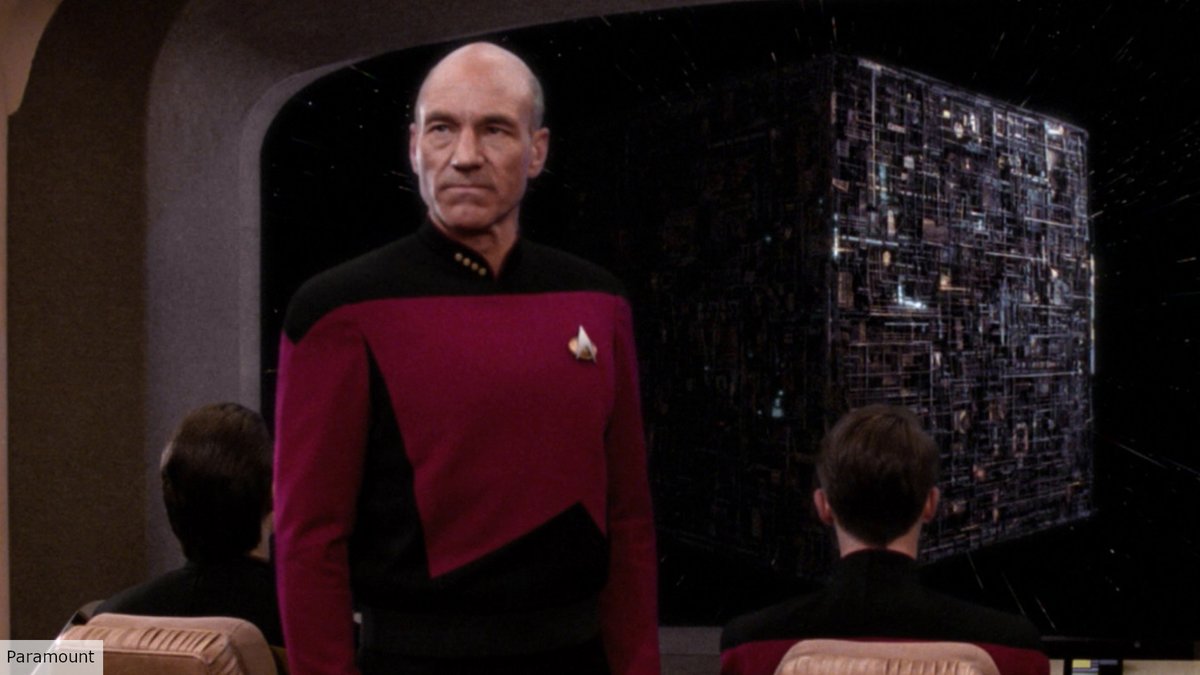
Long after its final warp jump, Star Trek: The Next Generation (TNG) remains a titan of television, celebrated for its blend of action, intellect, nuance, and intrigue. But beyond its weekly adventures, certain episodes didn't just tell a good story; they fundamentally reshaped the universe, deepened its lore, or irrevocably altered its characters. These are the game-changing and lore-expanding Star Trek: TNG episodes that didn't just entertain, they defined the very fabric of what Star Trek could be.
If you're looking to understand the true impact and lasting legacy of Captain Picard and the crew of the USS Enterprise-D, you can't skip these pivotal moments. They're the cornerstones that built a richer, more complex future.
At a Glance: Why These Episodes Matter
- Deepened Character Arcs: Witness pivotal moments that forever changed Picard, Data, Riker, and the entire crew.
- Expanded the Universe: Introduced new species, established critical political dynamics, and unveiled ancient mysteries that reverberated throughout the franchise.
- Challenged Federation Ideals: Explored the moral and ethical boundaries of Starfleet, forcing viewers to confront complex dilemmas.
- Set Future Standards: Many of these episodes are lauded as benchmarks for science fiction storytelling, influencing subsequent Star Trek series and beyond.
- Essential Viewing: Whether you're a new cadet or a seasoned admiral, these episodes provide the most profound insights into TNG's enduring appeal.
More Than Just Weekly Missions: Crafting a Legacy
Star Trek: The Next Generation didn't just continue the vision of Gene Roddenberry; it evolved it. Over seven seasons, it explored humanity's potential, grappled with ethical quandaries, and introduced unforgettable antagonists. But for a show to truly change a franchise, it needs episodes that do more than merely advance a plot. It needs moments that stick with you, that ripple through subsequent seasons, and that expand your understanding of the universe it inhabits.
These aren't just "good" episodes; they are the narrative bedrock, the ones that opened new dimensions of storytelling and lore. They're the ones that, if you skip them, you're missing a crucial piece of the Star Trek puzzle.
The Formidable Foes: Introducing and Elevating the Borg
No discussion of TNG's game-changing moments is complete without acknowledging the Collective. The Borg transformed Star Trek's perception of villains, moving beyond mustache-twirling antagonists to an existential threat unlike any other.
Q Who (Season 2, Episode 16)
Before "Q Who," the Federation largely saw itself as the most technologically advanced and morally superior civilization in the quadrant. This episode shattered that illusion. When Q hurls the Enterprise-D across the galaxy, they encounter the Borg for the first time—an unstoppable, terrifying collective whose technology and sheer numbers dwarf anything Starfleet has ever faced.
Why it's Game-Changing: It introduces the Borg, establishing them as the ultimate threat and fundamentally altering the power dynamic of the Alpha Quadrant. The episode instills a sense of vulnerability and fear that was largely absent from the optimistic TNG narrative up to this point. It also foreshadows Picard's future trauma and changes the tone of the series, hinting at darker, more perilous adventures to come.
The Best Of Both Worlds (Parts I/II) (Season 3, Episode 26 & Season 4, Episode 1)
This two-part cliffhanger is often cited as the pinnacle of TNG storytelling, and for good reason. The Borg return, more menacing than ever, and assimilate Captain Picard himself, transforming him into Locutus. This isn't just a battle for survival; it's a battle for identity and leadership, forcing Commander Riker into the captain's chair during humanity's darkest hour.
Why it's Game-Changing & Lore-Expanding:
- Picard's Trauma: Picard's assimilation leaves lasting psychological scars that are explored for seasons to come (and even in Star Trek: Picard). It's a personal tragedy that defines much of his character arc.
- Riker's Growth: Riker is forced to make impossible choices, cementing his leadership capabilities and readiness for command.
- Borg's Apex Threat: The Borg become the franchise's most iconic and terrifying villains, their method of assimilation and collective consciousness becoming a cornerstone of Star Trek lore.
- Season Finale Mastery: This episode redefined what a Star Trek season finale could be, delivering a high-stakes, emotionally resonant cliffhanger. For a deeper dive into the most pivotal moments, you might want to check out some analyses of the Best Star Trek TNG episodes.
I, Borg (Season 5, Episode 23)
In "I, Borg," the Enterprise crew rescues a lone Borg drone, whom Geordi La Forge names "Hugh." As Hugh recovers, he begins to develop individuality, challenging everything the crew thought they knew about the Borg. Picard grapples with the moral dilemma of using Hugh as a biological weapon against the Collective versus recognizing his burgeoning sentience.
Why it's Game-Changing & Lore-Expanding:
- Humanizing the Borg: This episode dared to explore the possibility of Borg individuality, a concept that completely recontextualizes the Collective and paves the way for future stories (like Seven of Nine in Voyager).
- Ethical Quandaries: It's a classic Star Trek ethical debate, pushing the boundaries of what it means to be a sentient being and forcing the crew to question their own humanity in the face of an enemy.
- Data's Perspective: Data's interactions with Hugh are particularly insightful, as he grapples with the concept of collective vs. individual identity.
Descent (Parts I/II) (Season 6, Episode 26 & Season 7, Episode 1)
Picking up on the thread of individual Borg, "Descent" sees Hugh return, leading a faction of individualistic Borg who are now manipulated by Lore, Data's evil brother. This storyline pushes Data's emotional development further, as he seemingly joins Lore and his individualist Borg.
Why it's Game-Changing & Lore-Expanding:
- Lore's Return and Data's Struggle: Lore's manipulation of Hugh and the individual Borg is a fascinating extension of the "I, Borg" premise. Data's apparent defection and exploration of his own "emotional responses" are critical to his ongoing journey to become more human.
- Borg Evolution: The episode shows the unpredictable consequences of Borg individuality, demonstrating that even a fractured Collective can be dangerous, especially when guided by a nefarious intelligence like Lore. It further complicated the lore surrounding the Borg.
Data's Quest for Humanity: Defining an Android's Soul
Data's journey from functional android to sentient being striving for humanity is one of TNG's most beloved and central arcs. Several episodes are paramount to understanding his evolution and the franchise's exploration of artificial intelligence.
The Measure of A Man (Season 2, Episode 9)
A Starfleet cyberneticist, Commander Maddox, seeks to dismantle Data to study him and mass-produce more androids. Captain Picard must defend Data's right to self-determination in a courtroom, arguing that he is a sentient being deserving of rights, not property.
Why it's Game-Changing & Lore-Expanding:
- Defining Sentience: This episode is a landmark exploration of artificial intelligence and personhood. It asks fundamental questions about what constitutes life and consciousness, directly addressing Roddenberry's vision of a future where all beings are respected.
- Data's Rights: It legally establishes Data as a sentient being within the Federation, impacting his future character development and setting a precedent for AI rights in Star Trek lore.
Data's Day (Season 4, Episode 11)
Less about galactic threats and more about the quiet beauty of everyday life, "Data's Day" is presented as a log entry from Data's perspective. We see him grappling with the nuances of human customs like weddings, participating in dance classes, and meticulously observing his friends, all while uncovering a subtle mystery involving a Romulan operative.
Why it's Game-Changing & Lore-Expanding:
- Internal Monologue: For the first time, we get extensive insight into Data's inner workings and observations, deepening his character and providing a unique window into his attempts to understand humanity.
- Slice of Life: It grounds the fantastic elements of Star Trek by showing the mundane, relatable aspects of life on a starship, emphasizing the "human" element Data strives for. It highlights how the everyday interactions contribute to the rich tapestry of the Enterprise experience.
Temporal Twists & Alternate Realities: Rewriting History
Some TNG episodes dared to play with the very fabric of time and space, creating alternate realities or sending characters across timelines, fundamentally altering the stakes and exploring "what if" scenarios.
Yesterday's Enterprise (Season 3, Episode 15)
The USS Enterprise-C, a ship from 22 years in the past, emerges from a temporal rift, altering the timeline into a grim, endless war with the Klingon Empire. Only Guinan senses the change. To restore the true timeline and prevent galactic devastation, Enterprise-C must return to its certain demise, and Tasha Yar, who died in the original timeline, volunteers to go with it.
Why it's Game-Changing & Lore-Expanding:
- Temporal Mechanics: It's a masterclass in temporal paradox storytelling, demonstrating the fragility of the timeline and the profound impact of even minor changes.
- Klingon History: It expands Klingon lore by establishing the heroic sacrifice of the Enterprise-C as a pivotal moment that cemented the fragile peace between the Federation and the Klingons.
- Character Redemption: Tasha Yar's return and heroic sacrifice provide a poignant sense of closure and purpose for a character who died early in the series, giving her a more meaningful end. This episode highlights how deeply TNG can explore its characters' destinies.
All Good Things (Parts I/II) (Season 7, Episode 25 & 26)
The series finale sees Captain Picard hurtling through three different timelines—past, present, and future—as Q challenges him to solve a temporal anomaly that threatens to erase humanity from existence. Picard discovers he inadvertently caused the anomaly, and he must unite his crews from across these eras to undo the damage.
Why it's Game-Changing & Lore-Expanding:
- Perfect Send-Off: It's widely considered one of the best series finales in television history, offering a poignant look at the crew's legacy and Picard's personal growth, especially his willingness to finally join his senior staff for their regular poker game.
- Q's Role: Q's final test for humanity solidifies his complex relationship with Picard and humanity, demonstrating his unique role as a cosmic observer and occasional catalyst for growth.
- Temporal Loop: It brings the series full circle, echoing "Encounter at Farpoint" with Q's judgment, while creating a new, compelling temporal paradox that showcases the entire crew's enduring compassion and courage.
Federation Ideals & Moral Quandaries: Testing the Limits
Star Trek is at its best when it challenges its own utopian ideals, forcing its characters—and viewers—to confront uncomfortable truths and ethical dilemmas.
Chain Of Command (Parts I/II) (Season 6, Episode 10 & 11)
Captain Picard is captured by the Cardassians and subjected to psychological torture by Gul Madred, who tries to break his spirit by demanding he see "five" lights when there are only four. Meanwhile, Riker grapples with command under an aggressive Starfleet admiral.
Why it's Game-Changing & Lore-Expanding:
- Picard's Resilience: This episode is a raw, intense exploration of Picard's mental fortitude and his unwavering commitment to his free will. His final, defiant declaration ("THERE ARE FOUR LIGHTS!") is iconic.
- Cardassian Antagonism: It firmly establishes the ruthless and manipulative nature of the Cardassian Union, building upon their introduction and setting the stage for their future role in Deep Space Nine.
- Starfleet's Dark Side: The internal conflict surrounding Riker's command highlights the political maneuverings and less-than-ideal aspects of Starfleet's highest ranks, showcasing the internal pressures the crew faces.
The Drumhead (Season 4, Episode 21)
Following an explosion, an investigation by a respected retired admiral quickly devolves into a witch hunt, turning friends against friends and threatening the very foundation of Starfleet's values. Picard stands up against the growing paranoia and McCarthyism.
Why it's Game-Changing & Lore-Expanding:
- Defense of Liberty: This episode is a powerful allegory for civil liberties and the dangers of unchecked suspicion and fear. Picard's impassioned defense of justice and due process is a defining moment for his character.
- Federation's Vulnerability: It shows that even within the enlightened Federation, the seeds of bigotry and fear can take root, testing the institution's commitment to its highest ideals. It's a reminder that utopia is a constant effort.
Ensign Ro (Season 5, Episode 3)
The Enterprise takes on Ensign Ro Laren, a disgraced Bajoran officer, who initially mistrusts Starfleet and her new crewmates. Her presence forces the crew, particularly Picard, to confront their biases and the complexities of Federation relations with oppressed peoples.
Why it's Game-Changing & Lore-Expanding:
- Bajoran Introduction: This episode introduces the Bajoran species and their backstory of Cardassian oppression, laying critical groundwork for the themes and characters that would become central to Star Trek: Deep Space Nine.
- Challenging Federation Optimism: Ro's cynicism and past trauma provide a contrasting perspective to the Federation's inherent optimism, forcing the show to grapple with issues of colonialism, cultural identity, and institutional prejudice.
The Heart of Starfleet: Humanity, Empathy, and Understanding
Not every impactful episode involves universe-altering events. Some of TNG's most profound contributions came from deeply personal stories that explored what it means to be human, to connect, and to understand.
Family (Season 4, Episode 2)
Following the traumatic events of "The Best of Both Worlds," Picard returns to Earth to visit his brother and nephew at his family vineyard in France. The episode explores his emotional recovery, the lasting impact of his assimilation, and the quiet comfort of family.
Why it's Game-Changing & Lore-Expanding:
- Picard's Healing: This episode is crucial for understanding Picard's character post-Borg. It shows the deeply personal cost of his ordeal and the importance of emotional processing, a rare vulnerability for the usually stoic captain.
- Humanity of the Crew: It offers a rare glimpse into the personal lives and families of Picard, Worf (who meets his adoptive parents), and Wesley Crusher (who watches a message from his deceased father), grounding the futuristic setting in relatable human experiences.
Darmok (Season 5, Episode 2)
Captain Picard finds himself stranded on a planet with an alien captain, Dathon, whose language consists entirely of metaphors based on their people's myths and historical events. Picard must find a way to communicate despite the seemingly insurmountable language barrier to survive a hostile creature.
Why it's Game-Changing & Lore-Expanding:
- Communication as the Ultimate Frontier: This episode brilliantly explores the essence of communication, demonstrating that understanding goes beyond mere translation; it requires cultural empathy and shared context.
- First Contact Nuance: It refines Star Trek's approach to first contact, showcasing that even with universal translators, genuine understanding can be incredibly challenging, leading to profound insights into alien cultures. "Darmok and Jalad at Tanagra."
The Inner Light (Season 5, Episode 25)
Picard is struck by an alien probe that makes him live an entire lifetime as Kamin, a resident of a doomed planet called Kataan. He falls in love, raises a family, and watches his civilization decline, all in a matter of minutes for his Enterprise crew.
Why it's Game-Changing & Lore-Expanding:
- Picard's Empathy & Perspective: This episode is a masterful character study, profoundly impacting Picard by giving him an entire lifetime of memories and experiences. It deepens his wisdom, empathy, and appreciation for life.
- Storytelling Excellence: It's a testament to TNG's ability to tell deeply moving, self-contained stories that nevertheless leave a lasting mark on a character, showcasing the franchise's capacity for emotional depth. It's often cited as one of the best science fiction episodes ever produced.
Conundrum (Season 5, Episode 14)
The crew of the Enterprise-D wakes up with complete amnesia, unable to remember their identities, ranks, or mission. A mysterious alien character, MacDuff, convinces them he is a high-ranking officer and persuades them to attack a Lysian command center, leading to a race against time to uncover the truth before innocent lives are lost.
Why it's Game-Changing & Lore-Expanding:
- Identity Exploration: This episode masterfully explores the nature of identity and command, stripping away all external markers and forcing the crew to rely on their inherent characters and moral compasses.
- Team Dynamics: It highlights the essential roles and personalities of each crew member, showing how their individual strengths (even without memory) contribute to the functioning of the ship. It's a powerful statement on the synergy required to run the Enterprise.
Beyond the Main Arc: Other Essential Moments
While many episodes are part of larger sagas, others stand alone as crucial pieces of lore or character development.
Encounter at Farpoint (Season 1, Episode 1 & 2)
The very first episode of Star Trek: The Next Generation introduces Captain Picard, the Enterprise-D, and the omnipotent Q. The crew's first mission tests their compassion and intelligence as Q puts humanity on trial.
Why it's Game-Changing & Lore-Expanding:
- Series Foundation: It establishes the core cast, the ship, and the tone of the series. Q's introduction sets up a recurring antagonist who will continuously challenge humanity's right to explore the galaxy.
- Roddenberry's Vision: It lays out Roddenberry's updated vision for Star Trek—a more diplomatic, intellectual approach to exploration, yet still with moments of action and wonder.
The Chase (Season 6, Episode 20)
Captain Picard embarks on a complex archaeological mission, racing against Klingons, Romulans, and Cardassians to decipher an ancient genetic code that leads to a profound discovery: all humanoid life in the galaxy shares a common ancestor, seeded by an ancient race.
Why it's Game-Changing & Lore-Expanding:
- Galactic Lore: This episode provides a massive piece of lore that explains the prevalence of humanoid lifeforms throughout the Star Trek universe, tying together diverse species with a common origin.
- Unity Message: It reinforces Star Trek's core message of unity and shared heritage, demonstrating that despite conflicts, all sentient beings have a common thread.
Watching the Game-Changers: A Roadmap for Deeper Appreciation
For new viewers, jumping into TNG can feel daunting, but focusing on these pivotal episodes can offer a richer, more nuanced understanding of the franchise's evolution. While "Encounter at Farpoint" is always a great starting point, you can certainly mix and match based on the themes that intrigue you most.
Many of these episodes are lauded not just within Star Trek circles but as exemplars of science fiction storytelling. They pushed boundaries, asked tough questions, and solidified TNG's place as a cultural phenomenon. By exploring these game-changing and lore-expanding episodes, you're not just watching television; you're experiencing the evolution of a universe and the thoughtful exploration of what it means to be alive.
So, queue up your favorites, settle in, and prepare to engage with some of the most impactful stories the final frontier has ever offered. You'll gain a whole new appreciation for the bold journey of Star Trek: The Next Generation.