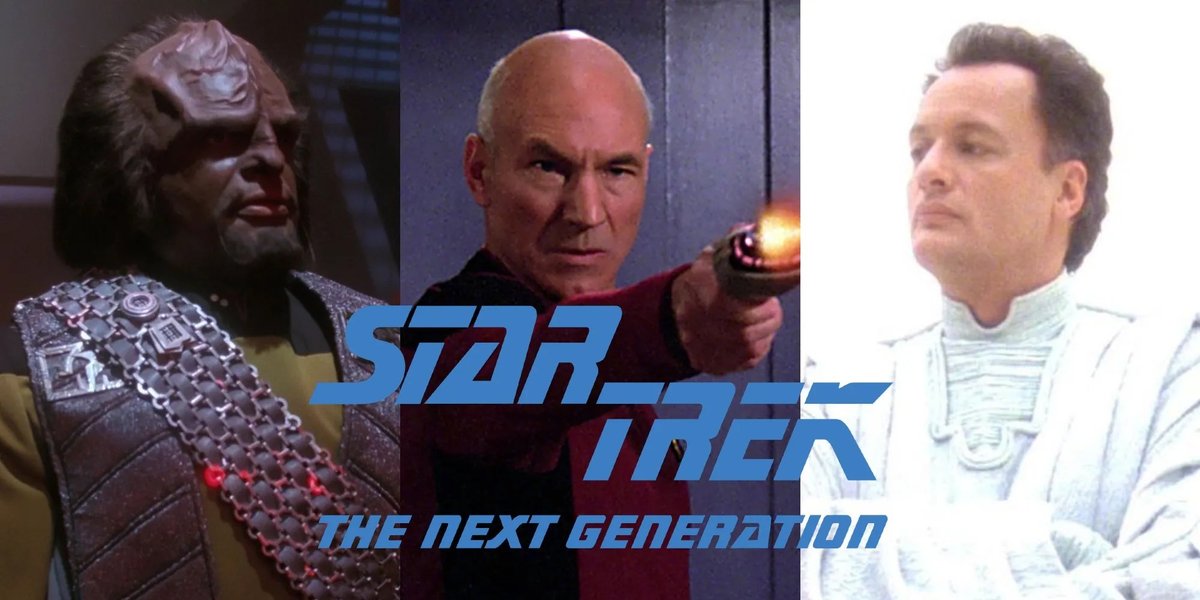
For all its gleaming chrome and philosophical promise, Star Trek: The Next Generation didn't always soar. Its initial seasons often struggled to find an identity, producing episodes that sometimes felt more like sci-fi concepts than compelling human (or alien) dramas. But then, a seismic shift occurred, one that redefined the show, made its characters immortal, and forever influenced Star Trek itself. This transformation was largely thanks to Michael Piller, whose "character-episode formula" became the secret sauce behind the show's most beloved and truly character-defining Star Trek: TNG episodes.
Piller's genius wasn't just about good storytelling; it was about focused storytelling. He insisted that each episode should revolve around a specific Enterprise crew member, allowing audiences to dive deep into their struggles, triumphs, and internal lives. This wasn't just a writing directive; it was an invitation for viewers to genuinely connect with Captain Picard, Data, Riker, Worf, and the entire crew on a profoundly personal level.
At a Glance: Piller's TNG Revolution
- The Problem: TNG's early seasons often lacked character focus, leading to inconsistent quality and audience detachment.
- The Solution: Michael Piller, head writer from Season 3, introduced the "character-episode formula."
- The Formula: Each episode spotlighted a single Enterprise crew member, exploring their personal journey or dilemma.
- The Impact: This approach created deep emotional connections, made characters iconic, and elevated TNG's quality dramatically.
- The Legacy: Piller's philosophy became a blueprint for subsequent Star Trek series like Deep Space Nine, Voyager, Enterprise, and even modern hits like Strange New Worlds and Lower Decks.
- Where to Watch: Star Trek: The Next Generation is available to stream exclusively on Paramount+.
The TNG Launchpad: Rocky Starts and Searching for Soul
When Star Trek: The Next Generation premiered in 1987, it had enormous shoes to fill. Gene Roddenberry's original vision was ambitious, but bringing it to life with a new crew was no small feat. The first season, and much of the second, saw the show grappling with its identity, cycling through writers, and often delivering episodes that prioritised high-concept sci-fi plots over the personal stakes of its characters. While flashes of brilliance emerged, a consistent emotional core was often missing.
This struggle wasn't lost on the production team. By Season 3, a critical change in leadership brought Michael Piller to the forefront as head writer. Piller understood that for Star Trek to truly resonate, it needed more than just warp cores and alien encounters; it needed people (and androids, and Klingons, and Betazoids) who felt real, whose internal lives mattered as much as their external adventures.
Piller's Vision: The Character-Episode Formula That Changed Everything
It was Piller who championed the groundbreaking "character-episode formula." As detailed by writer Ronald D. Moore in "The Center Seat: 55 Years of Star Trek," Piller mandated that every single episode should focus on a specific character and their personal arc. This wasn't about giving someone a B-plot; it was about making their journey the A-plot, the emotional anchor around which the entire story unfolded.
Think about it: instead of a generic alien threat, we got an episode where Data wrestled with the concept of his father, or Picard faced an impossible moral choice that challenged his very identity. This fundamental shift allowed writers to craft deeply personal narratives that explored themes of identity, morality, duty, and humanity through the lens of individuals we grew to love. It was this sustained focus that began producing the best Star Trek TNG episodes viewers would remember for decades.
Why It Worked: Crafting Connection and Consequence
The character-episode formula was a stroke of genius because it tapped into something universal: our innate desire to understand others. By zooming in on one character per week, Piller's approach:
- Fostered Deeper Empathy: We didn't just see Captain Picard give orders; we saw him agonize over them. We didn't just see Data perform calculations; we saw him yearn for a laugh or a dream. This allowed audiences to empathize with their internal struggles, making their victories more satisfying and their defeats more poignant.
- Built Relatability: Even in the 24th century, the core human experience remains. Picard's loneliness, Riker's ambition, Worf's cultural conflict—these are relatable themes, given context through specific personal narratives.
- Allowed for Organic Growth: Characters weren't static. Over seven seasons, we witnessed their evolution, their changing perspectives, and their hard-won wisdom, all thanks to episodes dedicated to charting their individual paths.
- Elevated Stakes: When an episode's central conflict directly challenged a character's core beliefs or aspirations, the stakes felt incredibly high, even if the fate of the galaxy wasn't hanging in the balance.
This character-centric philosophy wasn't just a fleeting success. It became the guiding principle for the rest of TNG's acclaimed run and was subsequently adopted by other Rick Berman-produced Star Trek series, including Deep Space Nine, Voyager, and Enterprise.
Icons Forged: The Characters Defined by Piller's Approach
Let's look at how this formula shaped some of TNG's most iconic figures, creating what truly became the best Star Trek TNG episodes in the process.
Captain Jean-Luc Picard: The Weight of Command and Humanity
Patrick Stewart's portrayal of Captain Jean-Luc Picard is legendary, and it's largely due to the character-defining episodes that explored his profound sense of duty, his moral compass, and his often-hidden vulnerabilities. Piller's formula allowed us to see beyond the commanding officer to the man beneath.
- "The Measure of a Man" (Season 2): While technically preceding Piller's official head writer tenure, this episode is a clear precursor to his philosophy. It places Data's personhood on trial, but the emotional core is Picard's impassioned defense, revealing his deeply held belief in individual rights and the sanctity of life. It defines Picard's ethical bedrock.
- "Yesterday's Enterprise" (Season 3): This episode, directly under Piller's guidance, challenges Picard with an impossible choice to restore a timeline, forcing him to sacrifice friends for a greater good. It showcases his capacity for grim resolve and strategic thinking, defining his leadership under pressure.
- "Family" (Season 4): A rare episode where Picard returns to Earth and grapples with family trauma and the lingering effects of his assimilation by the Borg. It strips away the captain, revealing a man scarred by experience, yearning for connection, and showcasing the depth of his character beyond the uniform.
- "The Inner Light" (Season 5): Widely considered one of TNG's best, this episode is a masterclass in character study. Picard lives an entire lifetime in a few minutes, experiencing love, loss, and the full spectrum of human emotion. It profoundly shapes his perspective, imbuing him with a quiet melancholy and a deeper appreciation for life's simple joys. This episode is a perfect example of why Piller's approach led to such enduring stories and why it's often cited among the best Star Trek TNG episodes.
Data: The Quest for Humanity
Brent Spiner's Data, the android yearning to be human, was tailor-made for Piller's character-focused approach. His journey of self-discovery provided endless opportunities for philosophical exploration.
- "The Offspring" (Season 3): Data attempts to create a child, Lal, forcing him to confront the complexities of parenthood, the nature of life, and the heartbreak of loss. This episode beautifully explores his desire for creation and his capacity for profound emotion, despite his mechanical nature.
- "Data's Day" (Season 4): A lighthearted but insightful look into Data's attempts to understand human customs, particularly in preparing for a wedding. It highlights his observational nature and his endearing, often literal, approach to social interactions.
- "Hero Worship" (Season 5): Data becomes a role model for a young boy orphaned by disaster, mirroring his own quest for identity. The episode offers a poignant reflection on his unique position as both an outsider and an inspiration.
Commander William T. Riker: Ambition, Loyalty, and the Second Chair
Jonathan Frakes' Riker embodied the dashing, confident first officer, but Piller's episodes often delved into his internal conflicts: his ambition versus his loyalty to Picard, and his struggles with command.
- "Peak Performance" (Season 2): Riker faces a tactical simulation against Picard, forcing him to step up and prove his leadership skills under pressure.
- **"Future Imperfect" (Season 4): Riker awakens years in the future, seemingly married with a son, only to discover the entire reality is an illusion. This psychological thriller explores his fears and desires for the future, and his deep connection to the Enterprise crew.
- "Second Chances" (Season 6): Riker confronts his own duplicate, Thomas Riker, forcing him to examine his life choices, his path not taken, and the evolution of his own character.
Worf: The Struggle for Honor and Belonging
Michael Dorn's Worf, the first Klingon in Starfleet, was a character rich with inherent conflict, and Piller's formula allowed for deep dives into his cultural identity.
- "Sins of the Father" (Season 3): Worf returns to the Klingon homeworld to defend his family's honor, introducing the complex political landscape of the Klingon Empire and solidifying Worf's internal struggle between his Starfleet duty and Klingon heritage. This episode laid crucial groundwork for his character's future.
- "Reunion" (Season 4): Worf discovers he has a son, Alexander, and must contend with the responsibilities of fatherhood while embroiled in Klingon political intrigue. It further defines his loyalty, his capacity for love, and his honor-bound nature.
- "Redemption" Parts I & II (Season 4 & 5): A two-part epic where Worf resigns his commission to fight alongside his brother in a Klingon civil war, fully embracing his Klingon identity and making profound sacrifices for his people.
Dr. Beverly Crusher & Counselor Deanna Troi: Empathy, Ethics, and Hidden Strengths
Gates McFadden's Dr. Crusher and Marina Sirtis's Counselor Troi often provided the emotional backbone of the Enterprise, and Piller's formula ensured their perspectives were central to many narratives.
- Dr. Crusher - "Suspicions" (Season 6): Crusher defies Starfleet orders to investigate the mysterious death of a scientist, showcasing her fierce ethical convictions and willingness to challenge authority for the truth.
- Dr. Crusher - "Remember Me" (Season 4): Beverly finds herself in a rapidly shrinking reality where crew members vanish, forcing her to confront isolation and the nature of reality. It's a psychological exploration of her resilience.
- Counselor Troi - "Face of the Enemy" (Season 6): Troi is abducted and surgically altered to impersonate a Romulan commander, forcing her to use her empathic abilities in a dangerous espionage mission. This episode finally gives Troi a formidable challenge and allows her to display incredible strength and cunning beyond her counseling duties.
- Counselor Troi - "Ménage à Troi" (Season 3): While a lighter episode, it highlights Troi's unique relationship with her mother, Lwaxana, and explores her Betazoid heritage, providing insight into her family dynamics and her emotional capabilities.
Geordi La Forge: Seeing Beyond the Visor
LeVar Burton's Geordi La Forge, the chief engineer who sees through a VISOR, often provided a unique perspective, and Piller's formula gave him opportunities to shine.
- "Galaxy's Child" (Season 4): Geordi grapples with a moral dilemma when the Enterprise inadvertently kills an alien life form's parent, making him a reluctant "parent" figure. It's a poignant exploration of unintended consequences and empathy.
- "The Mind's Eye" (Season 4): Geordi is brainwashed by Romulans and used as an unwitting assassin, highlighting his vulnerability and the insidious nature of psychological warfare.
- "Identity Crisis" (Season 4): Geordi faces a terrifying transformation into an alien life form, an episode that explores fear of the unknown and the strength of his friendships.
Beyond the Core: Fleeting Glimpses and Lasting Impressions
Even characters with shorter runs benefited from this focus. Denise Crosby's Tasha Yar, though short-lived, had "Symbiosis" which, while a weaker episode, still centered on her ethical struggle. Wil Wheaton's Wesley Crusher, a frequent target of fan ire, had episodes like "The Game" and "Suddenly Human" that delved into his prodigy status and his search for belonging, showcasing Piller's continued commitment to character-centric storytelling.
Piller's approach didn't just transform TNG into a beloved classic; it created a stable of unforgettable characters whose journeys resonated deeply with audiences. If you're looking to dive back into the series or experience it for the first time, focusing on these character-driven narratives is key to understanding its enduring appeal. The complete series, meticulously rescanned and rebuilt in 1080p HD, offers a stunning visual experience that truly enhances these intricate stories, all available on Paramount+.
The Lasting Legacy: TNG's Blueprint for Modern Star Trek
The impact of Piller's character-episode formula extends far beyond The Next Generation. In modern Star Trek, we see a successful return to this episodic, character-focused format in shows like Strange New Worlds and Lower Decks. These series, much like TNG, understand the power of dedicating an entire episode to a single character's growth, dilemma, or backstory.
Strange New Worlds, for instance, has captivated audiences with episodes dedicated to Lt. Spock, Number One, Dr. Joseph M'Benga, Nurse Christine Chapel, and Lieutenant La'an Noonien-Singh, allowing their personalities and backstories to unfold organically. This contrasts sharply with the serialized, lead-character focus of shows like Discovery and Picard, demonstrating that while serialization has its place, the character-of-the-week model remains a potent formula for building a beloved ensemble.
This enduring philosophy ensures that new generations of Star Trek fans can connect with characters on a personal level, just as millions did with Picard, Data, and Worf. Whether you're rediscovering the classics or exploring the newest adventures, recognizing the genius of Michael Piller's character-first approach will deepen your appreciation for the rich tapestry that is Star Trek. It's truly what makes the best Star Trek TNG episodes not just great science fiction, but enduring human drama.