For many, the universe of Star Trek: The Next Generation (TNG) represents the pinnacle of sci-fi storytelling, a hopeful vision of humanity's future filled with ethical dilemmas, grand adventures, and unforgettable characters. But with 178 episodes spanning seven seasons, diving in for the first time can feel like charting an unexplored nebula. Where do you begin to experience the magic without feeling lost in space?
Fear not, aspiring Starfleet cadet. As a seasoned guide to the cosmos of compelling television, I've curated the Best Star Trek: TNG Episodes for First-Time Viewers – a meticulously selected flight path designed to introduce you to the USS Enterprise-D, its iconic crew, and the profound themes that make TNG a lasting cultural phenomenon. You'll meet Captain Jean-Luc Picard, the stoic and intellectual leader; Data, the android striving for humanity; Dr. Beverly Crusher, the compassionate chief medical officer; and many more, all while grappling with questions of ethics, exploration, and what it means to be alive.
At a Glance: Your First Trek Into the Next Generation
Before we engage warp drive, here’s what this guide will equip you with:
- A Handpicked Starting Lineup: Forget random viewing; these episodes are chosen for their clarity, character introductions, and impactful storytelling.
- Essential Character Introductions: Understand who’s who and why they matter without needing prior knowledge.
- Core Star Trek Themes: Grasp the philosophical heart of TNG – exploration, diplomacy, ethical quandaries, and the pursuit of knowledge.
- No Prior Knowledge Required: Every recommended episode stands on its own, offering a perfect entry point.
- A Roadmap for Deeper Exploration: Beyond these foundational episodes, you'll be well-prepared to venture further into the series.
Why Start with TNG? A Modern Classic Awaits
Star Trek: The Next Generation isn't just a sequel to the original series; it's a bold reimagining, set a century later (the 24th century, specifically). It launched in 1987 and quickly carved its own legendary path, introducing an entirely new generation to the wonders of deep space exploration. The USS Enterprise-D, a majestic starship crewed by over a thousand souls, serves as both a vessel of discovery and a diplomatic envoy, pushing the boundaries of known space "where no one has gone before."
Led by the formidable Captain Jean-Luc Picard (played with masterful gravitas by Patrick Stewart), the crew faces everything from cosmic anomalies and hostile alien empires to profound ethical quandaries and personal growth challenges. Unlike its predecessor, TNG often prioritizes diplomacy and intellectual solutions over phaser fights, offering a more cerebral and hopeful vision of the future. It's a show that dares to ask big questions about artificial intelligence, consciousness, prejudice, and the very definition of humanity – all wrapped in compelling, often action-packed narratives.
For a first-time viewer, TNG offers an accessible entry point to the broader Star Trek universe. Its self-contained episodes, rich character development, and high production values (for its time) make it easy to jump in. You don't need to know anything about Kirk or Spock to appreciate Picard and Data; their stories stand on their own.
Your First Dive: Foundation Episodes (Season 1 & 2 Gems)
Let's begin your journey with episodes that lay the groundwork, introducing key characters, the ship's capabilities, and the inherent sense of wonder that defines TNG.
Where No One Has Gone Before (Season 1, Episode 6)
This early episode quickly demonstrates TNG's potential for exploring the truly unknown. The Enterprise is accidentally propelled billions of light-years away from Federation space by a peculiar propulsion expert and his enigmatic assistant, the Traveler. You'll witness the sheer awe and terror of being utterly lost in the cosmos. It introduces the immense power and responsibility of the Enterprise, the mysterious character of the Traveler, and offers a glimpse into the significant (and often debated) future of young Wesley Crusher. It's an excellent primer for the show's blend of hard sci-fi concepts with philosophical musings.
Datalore (Season 1, Episode 12)
If you want to understand Data, the beloved android science officer, this episode is mandatory viewing. "Datalore" delves into Data's origin story, introducing his "older brother," Lore – an earlier, more volatile prototype. Brent Spiner's dual performance as both the kind, striving-for-humanity Data and the cunning, malevolent Lore is a masterclass. This episode immediately establishes Data's unique place on the ship and sets up a fascinating, long-running character arc about artificial intelligence and what it means to be sentient.
Elementary, Dear Data (Season 2, Episode 3)
The holodeck is one of Star Trek's most iconic technologies, a virtual reality simulator that can create any environment. This episode is a delightful introduction to its capabilities and the crew's recreational pursuits. Data, with his insatiable curiosity, wants to solve a Sherlock Holmes mystery with Geordi La Forge. Things go wonderfully wrong when the Enterprise computer, attempting to create a foe capable of outwitting Data, inadvertently generates a truly self-aware holographic Professor Moriarty. It's a fun, engaging way to explore concepts of artificial intelligence, sentience, and the ethical lines we draw with technology.
The Measure of a Man (Season 2, Episode 9)
Widely considered one of TNG's absolute best, "The Measure of a Man" is a quintessential Star Trek episode. A Starfleet cyberneticist, Commander Bruce Maddox, demands the right to dismantle Data for study, claiming Data is merely Starfleet property, not a sentient being. What follows is a gripping courtroom drama where Captain Picard must defend Data's personhood and right to self-determination.
This episode is a powerful exploration of civil rights, consciousness, and the definition of life. Picard's impassioned arguments are nothing short of brilliant, making this a foundational piece for understanding TNG's ethical core and Data's profound journey. If you watch only one early TNG episode, make it this one.
Q Who (Season 2, Episode 16)
The omnipotent, mischievous entity known as Q (played by the iconic John de Lancie) is a recurring thorn in Picard's side and a fan favorite. In "Q Who," he returns with a chilling purpose: to prove to humanity that they are not ready for the galaxy's true dangers. Q hurls the Enterprise across space, straight into an encounter with the Borg.
This episode is a seismic event in Star Trek history. It introduces the Borg, a terrifying collective of cybernetic drones that assimilate other species into their hive mind. Their introduction changed the stakes of the entire franchise, presenting a threat unlike anything Starfleet had faced before. Picard's first face-to-face meeting with the Borg is harrowing, setting up conflicts that would resonate for years to come.
Hitting its Stride: Building Character and Conflict (Season 3 & 4 Essentials)
By Season 3, TNG had found its voice, delivering consistently strong episodes that deepened characters and explored more complex narratives.
Who Watches the Watchers (Season 3, Episode 4)
Starfleet's Prime Directive—the non-interference with less-developed civilizations—is one of its most fundamental tenets, and "Who Watches the Watchers" puts it to the ultimate test. When an observation post on a pre-warp planet is compromised, a native Mintakan villager witnesses the advanced technology of the Enterprise and believes Picard to be a god.
This episode expertly demonstrates the profound implications of cultural contamination and the delicate balance between observation and intervention. It’s a compelling look at the dangers of advanced civilizations imposing their will or technology on others, and Picard's desperate efforts to set things right.
The Enemy (Season 3, Episode 7)
The Romulans are one of Starfleet's most enduring adversaries, cunning and secretive. In "The Enemy," Chief Engineer Geordi La Forge finds himself trapped in a cave on a hostile planet with a Romulan officer named Bochra. Forced to rely on each other for survival, they must overcome generations of mistrust. Meanwhile, Captain Picard faces the difficult task of preventing an interstellar incident from escalating into open war. This episode beautifully highlights TNG's enduring message of cooperation and understanding, even between sworn enemies, demonstrating that common ground can be found in the most unlikely circumstances.
The Offspring (Season 3, Episode 16)
Data continues his quest for humanity, this time by attempting to procreate. He builds an android child, Lal, who rapidly develops and begins to assert her own identity, even choosing her own gender and species (a human female). The episode is a poignant exploration of parenthood, self-determination, and the ethical implications of artificial life. When a Starfleet admiral attempts to seize Lal for study, Data is forced to defend his "child's" right to exist and choose her own path. It’s a deeply emotional episode that showcases Data's evolving understanding of family and love.
The Best of Both Worlds, Parts 1 & 2 (Season 3, Episode 26 & Season 4, Episode 1)
This two-part epic is not just a high point for TNG, but for the entire Star Trek franchise. Following their introduction in "Q Who," the Borg launch a full-scale invasion, culminating in a devastating confrontation with the Enterprise. The stakes become terrifyingly personal when Captain Picard is assimilated and transformed into Locutus of Borg, becoming the collective's voice.
The cliffhanger at the end of Part 1 – with Commander Riker famously ordering Worf to "Fire!" on the Borg cube, knowing Picard is aboard – is one of television's most iconic moments. This storyline cemented the Borg as Starfleet's most formidable foe and had massive repercussions for Picard and the universe, influencing subsequent series like Star Trek: First Contact and Star Trek: Picard. It's a pulse-pounding, emotionally resonant masterpiece that you absolutely cannot miss. For more in-depth analyses of other standout narratives, you can explore comprehensive lists of the Best Star Trek TNG episodes.
Data’s Day (Season 4, Episode 11)
While TNG often deals with galactic threats, it also excels at showing the day-to-day life aboard a starship. "Data's Day" provides a charming, intimate look at the mundane through Data's unique perspective. He’s tasked with documenting a single day on the Enterprise for an anthropological study, acting as a "best man" for the wedding of Transporter Chief Miles O'Brien and Keiko Ishikawa, all while subtly uncovering a Romulan sleeper agent plot. It’s a wonderful episode for its humor, its insight into Data's evolving understanding of human customs, and its portrayal of shipboard life.
The Golden Age: Deep Thought and Iconic Moments (Season 5 & 6 Masterpieces)
By these seasons, TNG was consistently delivering some of the most critically acclaimed and beloved episodes in all of science fiction.
Darmok (Season 5, Episode 2)
"Darmok" is a brilliant, unconventional masterpiece about the fundamental challenges of communication. Captain Picard is stranded on a hostile planet with an alien captain, Dathon of the Tamarian species. Their language is based entirely on metaphor and historical allusions, rendering the universal translator useless. Think "Juliet at her balcony" or "Picard and Dathon at El-Adrel."
This episode is a profound meditation on the nature of language, culture, and connection. It forces Picard (and the audience) to abandon conventional communication and find common ground through shared experience and empathy. It’s unique, deeply moving, and a testament to TNG’s ability to tell truly innovative stories.
Disaster (Season 5, Episode 5)
Not every crisis on the Enterprise involves invading aliens. In "Disaster," a mysterious spatial anomaly strikes the ship, causing widespread system failures and separating the crew into small groups, each facing their own harrowing challenges. Picard is trapped in a turbolift with three young children, Riker and Data are stuck in cargo bay 3, and most notably, Counselor Troi finds herself the highest-ranking officer on the bridge, forced to take command despite her lack of experience. It's a fantastic character-driven episode that showcases the crew's resilience, ingenuity, and often surprising leadership qualities under extreme pressure.
Cause and Effect (Season 5, Episode 18)
This episode offers a fresh, clever take on the classic time loop trope. The Enterprise finds itself caught in a temporal causality loop, repeatedly colliding with another ship and exploding, only to reset moments earlier. The crew experiences growing feelings of déjà vu, but it’s Data who eventually finds a way to leave a message from one loop to the next, hoping to break the cycle. It's a masterfully structured episode that builds suspense, utilizes the crew's scientific minds, and provides a uniquely satisfying resolution.
I, Borg (Season 5, Episode 23)
Building on the terrifying legacy of the Borg, "I, Borg" explores a deeply ethical dilemma. The Enterprise rescues an isolated Borg drone, "Third of Five," who, away from the Collective, begins to regain individuality and takes the name "Hugh." The crew debates a plan to infect Hugh with a logic bomb to destroy the entire Borg Collective.
This episode forces Picard and the crew to confront the morality of genocide versus the survival of civilization. It's a powerful story about identity, compassion, and the complex definition of life, pushing the boundaries of what Starfleet stands for.
The Inner Light (Season 5, Episode 25)
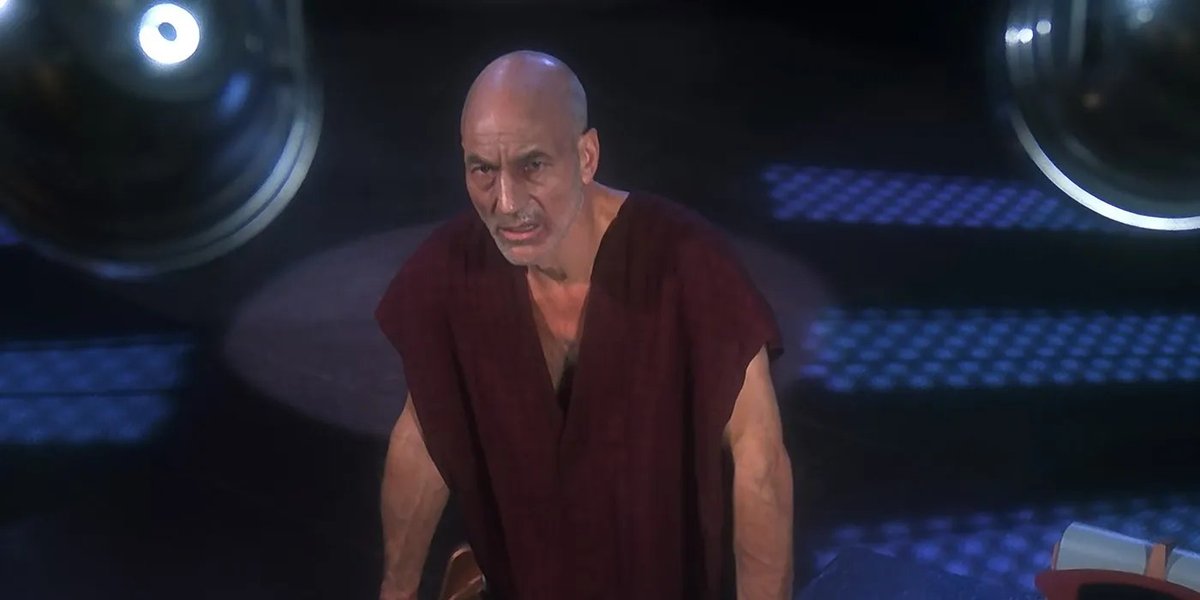
Often cited as TNG's crowning achievement, "The Inner Light" is a standalone masterpiece that profoundly impacts Captain Picard. Struck by an alien probe, Picard experiences decades of a simulated life as Kamin, an iron weaver on the dying planet Kataan. He marries, has children, and learns to play the Ressikan flute, living a full, rich life. He awakens after only 25 real-world minutes, retaining all the memories and the flute itself.
This episode is a beautifully told tale of loss, memory, love, and the enduring legacy of a forgotten civilization. It’s a profoundly human story that reveals a side of Picard rarely seen, making it an essential watch for understanding his character's depth and the show's emotional power.
Chain of Command, Parts 1 & 2 (Season 6, Episodes 10 & 11)
This two-part episode is a stark departure from TNG's usual optimistic tone, showcasing the darkest aspects of conflict. During a covert mission, Captain Picard is captured by the Cardassians and subjected to brutal torture, while a difficult temporary captain, Edward Jellico, takes command of the Enterprise.
"Chain of Command" features one of Patrick Stewart's most acclaimed performances as Picard faces psychological torment, unwavering in his resolve despite immense pain. It's a gritty, intense story about resilience, moral integrity, and the horrors of war. It also provides a crucial introduction to the insidious nature of the Cardassian Union, a significant adversarial force in later Star Trek series.
Beyond the Screen: Common Questions for New Recruits
Starting a journey through a beloved franchise can bring up a few questions. Here are some quick answers for first-time TNG viewers:
- Do I need to watch the original Star Trek (TOS) first? No. While TNG exists in the same universe, it's set a century later with a new crew and a different tone. You can jump straight into TNG without feeling lost. Any references to TOS are usually explained or are minor Easter eggs.
- What about the movies? Do I need to watch those? Not initially. The TNG crew went on to star in four feature films after the series ended. You can enjoy the TV show completely independently. If you get hooked, Star Trek: First Contact is an excellent film that directly follows up on the Borg storyline.
- Is Season One really that bad? Season One of TNG has a reputation for being weaker, and it's true it has some rough patches and takes time to find its footing. However, it also contains some genuinely good episodes, like "Where No One Has Gone Before" and "Datalore," which are included in this list. Don't let its reputation scare you away entirely; the show improves rapidly from Season Two onwards.
- Where can I stream TNG? In the US, Star Trek: The Next Generation is available to stream on Paramount+. Availability may vary in other regions.
Your Continuing Mission: What's Next After These Episodes?
Congratulations! By watching these carefully selected episodes, you’ve not only experienced some of the finest storytelling Star Trek has to offer, but you've also been introduced to the core characters, themes, and conflicts that define Star Trek: The Next Generation. You now have a solid foundation to truly appreciate the depth and breadth of the series.
What’s next? I highly recommend going back to the beginning of Season One (if you didn't start there) and watching the entire series in order. You’ll catch nuances and character arcs you might have missed, and you’ll witness the full evolution of this incredible crew. There are many more fantastic episodes awaiting your discovery!
And if, after all 178 episodes, you still crave more of Jean-Luc Picard's journey, consider diving into Star Trek: Picard, a modern series that picks up decades later, exploring the captain's later life and impact on the galaxy.
No matter your path, your journey into the final frontier has just begun. Engage!